


cb.web.local

twitter linkedin acp contact

Nigeria and FAO collaborated to advance climate smart agriculture

Nigeria is taking firm steps to deepen its partnership with the Food and Agriculture Organization as part of a broader effort to improve food security and promote climate smart farming.

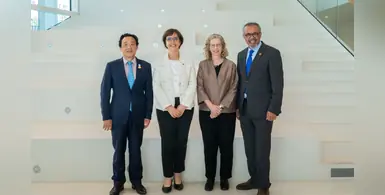
This renewed commitment was highlighted by the Minister of State for Agriculture and Food Security, Aliyu Sabi Abdullahi, following a strategic meeting in Abuja with an FAO delegation led by Country Representative Hussein Gadain.

The collaboration is expected to support farmers through the adoption of climate resilient practices, better access to quality seeds, and the use of modern agricultural technologies. It also aims to strengthen value chains, helping farmers move beyond basic production into more sustainable and profitable systems.

Abdullahi noted that Nigeria has maintained a strong and productive relationship with the FAO over the years. This partnership has supported key areas such as technical assistance, financial support, and the development of agricultural data systems. However, he stressed that more needs to be done, especially in improving irrigation. Expanding and modernising irrigation systems, he explained, is essential for year round farming and increased food production.

He also pointed to plant health and pest control as urgent priorities. Addressing these challenges effectively will not only protect crops but also improve yields and support long term sustainability in farming practices across the country.

In a related view, the Minister of Agriculture and Food Security, Abubakar Kyari, emphasised the role of structured market systems in transforming agriculture. He explained that better organised markets can help shift farming from subsistence to a more competitive and profitable sector. This change would increase farmers’ incomes while strengthening the overall economy.

Kyari also highlighted the importance of digital tools and improved market information. These tools can help farmers access fair prices and reduce dependence on middlemen. He referenced growing agribusiness platforms that are already making a difference by connecting farmers to essential services and opportunities.

The FAO, through Hussein Gadain, acknowledged Nigeria’s vast agricultural potential and reaffirmed its commitment to continued support. With a shared focus on innovation, sustainability, and strong partnerships, both sides are working towards building a more resilient and productive agricultural sector.

Yemisi Iranloye, FOUNDER and CEO, PSALTRY INTERNATIONAL (image credit: How we made it in Africa)

Yemisi Iranloye’s journey into agribusiness reflects determination, vision, and a deep understanding of Nigeria’s agricultural potential.

As the founder and CEO of Psaltry International, she transformed a common local crop into a thriving industrial business that now supplies major companies such as Nestlé and Unilever.

Cassava, widely grown and consumed across Nigeria, is often associated with everyday foods like garri and fufu. While these traditional uses remain important, the crop holds far greater value beyond the kitchen. It can be processed into products such as starch, ethanol, glucose syrup, and flour, all of which are in demand across different industries. Its gluten free nature also makes it appealing in the growing health and wellness market, where alternatives to wheat flour are increasingly sought after.

Recognising this untapped potential, Iranloye made a bold decision at the age of 40. She left her job to fully commit to building her cassava processing business. This move marked the beginning of a journey that required patience, resilience, and a willingness to take risks. Her efforts soon paid off when Psaltry International secured its first major client, Nestlé Nigeria, setting the stage for future growth.

In an interview Iranloye shared insights into her entrepreneurial path. She spoke about the importance of understanding market needs and aligning business ideas with real demand. Her story also highlights the value of persistence and long term thinking, especially in an industry that requires time to grow.

Beyond her personal success, her work draws attention to the wider opportunities within Nigeria’s agribusiness sector. With the right approach, crops like cassava can drive industrial development, create jobs, and support economic growth. Her experience serves as a reminder that local resources, when properly utilised, can compete on a global scale.

Iranloye’s journey continues to inspire many aspiring entrepreneurs who are looking to turn simple ideas into lasting success.

Nigeria strengthens ties with Gates Foundation to boost agriculture (Image credit: Premium Times)

Nigeria is set to reinforce its partnership with the Gates Foundation, with renewed focus on key sectors such as agriculture, nutrition, and digital transformation

This commitment was highlighted by Vice President Kashim Shettima during a recent meeting in Abuja with a delegation from the foundation, led by Hari Menon, President of the Global Growth and Opportunity division.

During the meeting, the Vice President recognised the foundation’s consistent support and long standing contributions to Nigeria’s development. He noted that its investments and humanitarian efforts have played a meaningful role in shaping progress across several sectors. The collaboration, he explained, remains important in driving positive change and building a stronger national outlook.

“We need the Gates Foundation not just as a strong and consistent partner but as a major stakeholder in the Nigeria Project.”

He further expressed appreciation for the commitment shown by the organisation, especially through its local team, describing them as dedicated and dependable partners. According to him, the relationship will continue to grow, particularly in areas that directly impact people’s wellbeing.

“You have sustained investments across human capital development, nutrition, agriculture, health system and so many areas.”

The Vice President also highlighted the importance of improving agricultural productivity. He pointed out that modern farming methods, better use of resources, and improved planning are essential to achieving meaningful results. He encouraged the use of advanced techniques such as climate resilient seeds, precision farming, and effective irrigation systems to help farmers increase output.

“We have been talking about agriculture for far too long, but the whole mantra is about how to increase productivity,” he stated.

Looking at the broader picture, he described Nigeria as a country full of promise, suggesting that with the right actions, it could compete with some of the world’s leading economies. He referred to the nation as a sleeping giant, echoing a well known historical remark.

On his part, Hari Menon shared the foundation’s intention to deepen its engagement with Nigeria. He acknowledged ongoing reforms and expressed confidence in the country’s direction.

“There are lots of very dynamic changes underway, and the Gates Foundation is privileged to have the opportunity to partner with the government of Nigeria.”

Rising costs put South African Grain farmers under pressure (Image credit: Scrolla.Africa)

South Africa’s grain farmers are facing growing pressure as the cost of diesel and fertiliser continues to climb, placing strain on production and raising concerns about the country’s food supply.

What was already a challenging environment is becoming even tougher as input costs rise at a pace many farmers struggle to keep up with.

Diesel remains one of the most important inputs in farming, accounting for around 13 to 15 percent of the cost of producing crops. Grain SA has warned that diesel prices could increase by more than R8 per litre in the next fuel price adjustment. Such a sharp rise would not only affect farmers but also transport operators and, ultimately, consumers who depend on stable food prices.

The issue is made worse by South Africa’s reliance on imported fuel. Since most diesel is sourced from global markets, local farmers are directly exposed to international price shifts. Each increase filters through the entire agricultural chain, from planting to harvesting and distribution.

Fertiliser adds an even heavier burden. It represents between 30 and 50 percent of a farmer’s production costs, making it one of the most significant expenses in grain farming. With more than 80 percent of fertiliser being imported, farmers have little control over pricing and are vulnerable to global supply changes.

Grain SA chairperson Richard Krige said farmers are dealing with one of the sharpest cost increases in recent years, especially as they prepare for winter planting while managing the harvest of summer crops. The timing makes the situation even more difficult, as cash flow is already under pressure during these periods.

There are also concerns about pricing practices within the fertiliser market. Grain SA has questioned whether some suppliers are charging higher prices despite having purchased stock at lower rates.

Grain SA CEO Dr Tobias Doyer called on companies and government to act responsibly and work together to keep the sector stable.

"Farmers cannot handle endless cost increases," Doyer said, warning that disruptions to farming could have serious consequences for the country's food supply.

As costs continue to rise, the future of food production in South Africa hangs in the balance.

Uganda strengthens smart agriculture through AI driven partnership

Uganda is placing agriculture at the centre of its digital transformation through a new partnership designed to modernise farming and improve rural livelihoods.

The Ministry of ICT and National Guidance has joined forces with the United Nations Health Industry Foundation and the Prince Kimbugwe Foundation to promote smart agriculture powered by artificial intelligence.

The agreement focuses on bringing practical solutions to farmers by combining technology with everyday agricultural practices. Through this collaboration, AI laboratories will be set up, research projects will be carried out and training programmes will be introduced to equip young people and agricultural professionals with modern skills.

Permanent Secretary Dr Amina Zawedde linked the initiative directly to Uganda’s economic future and the role agriculture will play in it. “This MOU falls in line with our vision of a USD 500 billion economy by 2040. Our people will gain new skills and have opportunities to visit China on exchange programmes to learn about smart agriculture and replicate those practices here,” Dr Zawedde said.

A major goal of the partnership is to transform agribusiness by improving productivity and efficiency. Farmers are expected to benefit from better farming methods, stronger systems and access to digital tools that can guide decision making and increase yields.

Chunxiao Huang, Chairman of the UN Health Industry Foundation, pointed to the wider impact of integrating AI into agriculture. “This partnership will create more than 50,000 jobs in five years and enable Uganda to develop new smart cities,” Huang said.

At the community level, the focus remains on making technology accessible. Edward Kimbugwe, founder of the Prince Kimbugwe Foundation, explained how rural farmers will directly benefit. “Through this partnership, rural farmers will receive drones to monitor their farms and learn smart agriculture practices, helping them apply technology in their daily work,” Kimbugwe said.

The partnership also introduces exchange programmes that will allow Ugandan students and agricultural experts to learn from international best practices and adapt them locally.

With a strong emphasis on smart agriculture, the initiative is expected to boost productivity, strengthen food systems and create new opportunities for farmers across Uganda.

More Articles …