



vc.web.local

twitter linkedin acp contact

Poultry

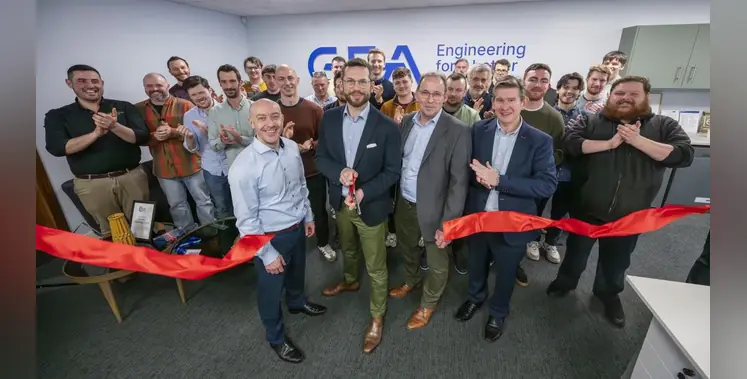
Natasha Hall as Vice President VIV Worldwide. (Image credit: VIV WORLD)

VIV Worldwide is entering a new phase of global development with the appointment of Natasha Hall as Vice President VIV Worldwide by Royal Dutch Jaarbeurs | VNU Group.

The move signals a renewed focus on expanding the international reach of the VIV brand and strengthening its role as a leading platform for the global livestock and agrifood industry. The announcement also comes at an important time as preparations gather pace for major upcoming VIV events around the world.

The appointment arrives just months ahead of VIV Europe 2026, which will take place from 2 to 4 June at Koninklijke Jaarbeurs in Utrecht. This edition is particularly significant as it marks the 25th anniversary of the event, one of the most recognised trade gatherings for professionals across the feed to food chain. At the same time, the organisation is also preparing to launch VIV Select India, which will make its debut from 22 to 24 April in New Delhi, opening new opportunities in one of the fastest growing livestock markets.

Hall’s promotion reflects the organisation’s confidence in her leadership and international outlook. Jeroen van Hooff, President and CEO of Royal Dutch Jaarbeurs, emphasised the impact she has already made within the organisation. "From the very start of her time at Jaarbeurs in 2025, Natasha has made a clear mark on the development of VIV Asia, where her international work experience and strategic vision contributed to growth, positioning and market connection. Her new role sets her up for the next step within the organisation and for further developing VIV as a globally leading B2B platform for the poultry and livestock sector."

In her new role, Hall will oversee the complete global VIV portfolio across Asia, Africa, Europe and the Middle East and Africa region. Her responsibilities include the international VIV trade shows along with VIV Connect and the VIV Trade Forums. A key priority will be expanding the global network of exhibitors, visitors and industry partners while strengthening the international visibility of the VIV brand.

With more than a decade of experience in the exhibitions industry in Dubai, Hall brings strong international expertise to the role. "I see VIV as a unique global platform that brings together the entire feed to food chain, and I consider that integrated approach to be an important differentiating strength," said Hall.

Her appointment also comes during a milestone year for the brand. VIV Europe 2026 will celebrate its 25th edition and will also mark the decision to move the event to a biennial schedule from 2028 onwards. "VIV Europe has grown into a reliable and forward-looking platform where strategy, technology and business come together. The anniversary edition in June will once again bring hundreds of international exhibitors and thousands of professionals from the global feed to food chain to Utrecht — a recognised hub for agrifood innovation, science and sustainable chain development."

Getting Feed Transitions Right.

Feed transitions are often underestimated on the farm, yet few decisions carry as much weight when it comes to how well a flock performs at the end of the cycle.

From the moment chicks arrive to the point they reach processing weight, broilers move through several distinct feed phases, each with its own nutritional profile and physical form. Managing these shifts well is what separates a high-performing flock from one that struggles to hit its targets.

As birds grow, their diet moves through starter, grower and finisher specifications, and with each change comes an adjustment in feed texture too, progressing from mash through to crumb and eventually pellet. These are not minor tweaks. Each phase is designed to match the bird's changing biological needs, and any disruption to that process can set the flock back in ways that are hard to undo.

The changeover from starter to grower feed tends to be the trickiest. It brings both a nutritional shift and a change in feed form at the same time. Offering the first batch of grower feed as a crumb or mini pellet rather than a full-sized pellet makes the adjustment far easier for the birds. When this step is skipped, intake tends to drop, growth slows and uniformity across the flock takes a hit.

The simplest and most effective way to handle any transition is to blend the outgoing feed with the incoming one, layering the new on top of the old so birds ease into the change naturally rather than encountering it all at once.

Done properly, feed transition management keeps intake steady, limits wasteful flicking behaviour, protects carcass quality and supports consistent flock health throughout the cycle. These are not just welfare considerations. They translate directly into better returns for the producer.

Planning feed transitions carefully is not optional. It is fundamental to running a productive, profitable broiler operation.

An AGRA-led matchmaking platform designed to connect agribusinesses with investors and financiers. (Image credit: AGRA)

The Poultry Futures Forum 2025 has officially opened in Lusaka, marking a pivotal moment for Southern Africa’s ambition to build stronger, more resilient poultry value chains.

Led by AGRA under the Southern Africa Poultry Initiative (SAPI), the Forum calls for a decisive shift from fragmented national interventions to a unified regional strategy. AGRA stressed that coordinated action is essential to boost production, reduce feed costs, enhance climate resilience and unlock deeper private sector investment while championing innovation and the leadership of young entrepreneurs.

The event has drawn an influential mix of stakeholders, including SADC government representatives, commercial poultry businesses, grain processors, researchers, financiers and agri-preneurs. Their shared goal is to accelerate practical, cross-country collaboration to resolve the structural challenges that continue to hold back the growth of the poultry industry.

This year’s Forum builds on the outcomes of the inaugural meeting held in Dar es Salaam in 2024, where delegates agreed on the need for a shared regional roadmap. Over the past year, several countries have made meaningful progress by aligning national action plans with the overarching regional poultry agenda, showing growing commitment to collective development.

In his opening message, AGRA Board Chair, H.E. Hailemariam Dessalegn, highlighted the momentum already taking shape, stating: “Over the past year, we have seen encouraging momentum. Several countries have developed national poultry action plans. Youth entrepreneurs are bringing new digital solutions to production and marketing. Most notably, we have launched the Poultry Feed Accelerator Grand Challenge – a direct response to the number one constraint identified by producers across our region: the high and volatile cost of feed. This initiative invites innovators, researchers and investors to present breakthrough ideas that can lower feed costs while improving quality and sustainability.”

True to its mission of inclusive growth, the Forum places young people and women at the centre of its agenda. A dedicated Youth Poultry Forum and Innovation Pitch provides a platform to showcase emerging entrepreneurs whose innovations are addressing key industry challenges from feed technology and disease control to climate resilience and market access. AGRA aims to spotlight these rising leaders who are shaping a more dynamic and competitive poultry sector across the continent.

Peter Kapala, Zambia’s Minister of Fisheries and Livestock, said, “The government of Zambia has prioritized poultry development under the eighth National Development Plan (8NDP) and the Comprehensive Agriculture Transformation Support Programme (CATSP), in alignment with the Comprehensive Africa Agriculture Development Programme (CAADP). Zambia takes pride in its position as a regional leader, particularly in the export of day-old chicks and specialty birds such as quails. The government is committed to creating an enabling environment to strengthen the domestic and regional poultry market, safeguard local producers, and promote value addition. This commitment includes: inclusive policies that empower smallholder farmers, women, and youth, improved access to quality feed, veterinary services, and climate-smart practices, promotion of affordable technology and digital advisory services.”

Throughout the Forum, discussions will explore opportunities for greater private sector collaboration, particularly in expanding regional feed manufacturing capacity and reinforcing input supply chains. Delegates will also examine how climate-resilient production systems and improved disease management strategies can support long-term sector sustainability. These include new genetics and animal health solutions designed to strengthen productivity even under climate stress.

SAPI Technical Lead Alexander Stewart, said, “The Poultry Futures Forum high-level discussions and working sessions are focused on aligning policy and regulatory frameworks to improve cross-border trade and market integration across SADC. Through this coordination, the partners aim to help countries draft and refine national poultry action plans that align with regional goals for food security and economic growth.”

A major highlight of the event is the Deal Rooms, an AGRA-led matchmaking platform designed to connect agribusinesses with investors and financiers. These sessions aim to accelerate enterprise growth across the value chain from feed production and processing to cold chain logistics and packaging ultimately supporting a more competitive and sustainable poultry sector for the region.

The partnership was announced during the Saudi AgriFood Tech Alliance (SAFTA) Forum on November 4, 2025.

In a major step toward sustainable agriculture and climate innovation, Tanmiah Food Company, one of Saudi Arabia’s leading poultry producers, has joined forces with Strataphy, a pioneer in geothermal cooling technology, to establish the Middle East and North Africa’s first geothermal-cooled poultry farm.

The groundbreaking pilot project will be located at Tanmiah’s Shaqrah Facility, marking a significant milestone in the region’s journey toward agricultural decarbonization.

The partnership was announced during the Saudi AgriFood Tech Alliance (SAFTA) Forum on November 4, 2025, under the patronage of His Excellency Eng. Mansour Hilal Al Mushaiti, Vice Minister of Environment, Water, and Agriculture.

Zulfiqar Hamadani, CEO of Tanmiah Food Company, emphasized that innovation and sustainability form the core of Tanmiah’s long-term vision.

“This partnership with Strataphy transforms our climate goals into real-world action,” Hamadani said. “Geothermal cooling not only supports our sustainability objectives but also delivers operational efficiency and aligns with the goals of Saudi Vision 2030.”

The new system will use Strataphy’s geothermal cooling technology, which taps into the Earth’s naturally stable underground temperatures through shallow boreholes. This provides a continuous, energy-efficient cooling solution—reducing dependence on conventional HVAC systems, cutting power consumption, and lowering carbon emissions.

Implemented under Strataphy’s Cooling-as-a-Service (CaaS) model, the project eliminates upfront costs for Tanmiah. Instead, it turns cooling into a predictable operational expense, with Strataphy managing system design, drilling, installation, and ongoing maintenance. The service model guarantees long-term performance and cost savings while reducing the environmental footprint of poultry production.

According to Ammar Alali, CEO of Strataphy, the collaboration represents a new era for clean technology in food production. He said, “In hot climates, poultry cooling can be a major energy drain. Our geothermal solution turns that challenge into an opportunity for sustainability and efficiency,” Alali explained. “This project proves that Saudi Arabia can lead the world in low-carbon agricultural innovation.”

The Shaqrah initiative is the first phase in Tanmiah’s broader plan to decarbonize its operations nationwide. Insights from the pilot will guide future geothermal deployments across Tanmiah’s network, potentially reshaping poultry farming economics throughout Saudi Arabia and the wider MENA region.

Muhammad Abbas Khan, Chief Strategy Officer at Tanmiah, added,“We’re proud to pioneer a solution that’s both economically viable and environmentally responsible. This initiative redefines how energy is used in food production and sets a benchmark for sustainable farming in arid regions.”

With cooling accounting for over 70% of Saudi Arabia’s building energy use, geothermal technology offers a scalable path to energy efficiency and food system resilience supporting the Kingdom’s Vision 2030 ambitions for sustainability and innovation in agriculture.

South Africa’s poultry master plan needs urgent action.

In 2019, South Africa’s Poultry Sector Master Plan (PSMP) was launched with bold ambitions: to protect the industry from dumped imports, boost local production, grow exports, create jobs, and expand black ownership.

Six years later, while the vision still resonates, the momentum behind it is fading.

The PSMP was designed as a joint public–private effort to rebuild the country’s broiler value chain, which had suffered years of damage from unfair trade. It focused on five key pillars: enforcing trade remedies, stimulating local demand and production, expanding exports, supporting transformation, and improving governance through a dedicated oversight council.

In its early phase, the plan showed real promise. The poultry industry responded quickly, committing over R2.2 billion in new investments — surpassing the initial R1.5 billion target. Trade measures, supported by bird flu outbreaks abroad, began to reduce dumped imports, offering local producers some relief.

Major producers expanded operations, onboarded contract growers, and created jobs. Emerging farmers were integrated into formal value chains through offtake agreements, marking visible progress in transformation. These developments proved that when government and industry worked in sync, results followed.

But since the last election, progress has stalled. Responsibility for the PSMP was shifted to deputy ministers, and political attention drifted. While government leaders, including Gauteng MEC Ramokgopa and Agriculture Minister John Steenhuisen, have reaffirmed their commitment — citing new financial packages, bird flu vaccination plans, and improved cold chains — much of it remains on paper.

Exports, a cornerstone of the plan, are still blocked by red tape. Negotiations with key markets like the EU, UAE, and Saudi Arabia have made little headway. Veterinary labs remain underfunded and understaffed, delaying health certification. As one insider put it, “Exports die in the lab. Producers are ready, but the paperwork isn’t.”

The plan also promised blended finance to help small and black-owned producers scale up. Yet funding access remains limited, and government-imposed conditions on vaccine rollouts have made key health programmes unaffordable and impractical for producers.

Ultimately, the Master Plan was never meant to be carried by the private sector alone. It’s a shared compact — one that depends on both sides delivering. The poultry industry has largely honoured its commitments. Now, government must match that effort with urgent, transparent and time-bound action.

South Africa’s poultry sector still holds massive potential — for rural jobs, food security, black empowerment and export growth. But unless government moves beyond promises to delivery, the PSMP risks becoming a cautionary tale of plans made, but not kept.

More Articles …