


cb.web.local

twitter linkedin acp contact

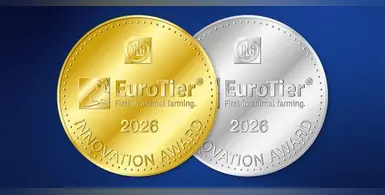
EuroTier 2026 is set to take place from 10 to 13 November in Hanover. (Image source: DLG)

The German Agricultural Society, DLG-organised trade fair for livestock professionals, EuroTier, has issued call for the Innovation Award EuroTier seeking technological innovations to address on-ground problems in modern livestock farming

The Innovation Award EuroTier in gold or silver goes to the winner who gets chosen following an in-depth technical evaluation by an independent panel of international experts appointed by the DLG. 

Alongside, the Animal Welfare Award is also seeking submissions for trendsetting offerings for the industry. This recognises products that promote species-appropriate behaviour and squarely supports animal health. Also presented by the DLG in cooperation with the bpt (German Veterinary Practitioners Association), this particular award is build on the gold or silver earned as part of the EuroTier Innovation Award. While animal welfare is only one of several criteria for the Innovation Award, the Animal Welfare Award specifically recognizes a product that meets the requirements for a higher animal welfare standard to an exceptional degree.

Decisive factors include innovations in animal welfare and animal health. Products that promote species-appropriate behavior and actively support animal health are particularly highlighted.

EuroTier 2026 that is set to take place from 10 to 13 November in Hanover, Germany, will be driven by the theme 'Intelligence in animal farming', promoting technologies that improve efficiency, animal welfare, and farm management, while also delivering benefits in terms of environmental and energy performance.

Registration for the EuroTier Innovation Awards 2026 automatically includes entry for the Animal Welfare Award 2026.

Award-winning products must be fully functional at the time of the exhibition and must be available on the market by EuroTier 2028 at the latest. The last edition of EuroTier included more than 210 world premieres entered into the innovation award scheme.

The application deadline for the EuroTier 2026 awards is July 31, 2026.

Tanzania’s Kagera region is stepping up efforts to attract investment into dairy and beef production as part of a wider strategy to unlock its vast livestock potential and respond to rapidly growing demand for animal protein at both national and regional levels.

The renewed push was articulated by the Minister for Livestock and Fisheries, Bashiru Ally, during a working visit to a Farmers’ Field School in Muleba district.

Dr Ally underscored the importance of scaling up the production of high-quality animal feed, describing it as a critical driver for increasing milk and meat output. He pointed to Kagera’s strong natural advantages, including abundant pasture, reliable water resources and a strategic location within the Great Lakes region, positioning the area as a prime destination for commercial livestock investment.

Highlighting opportunities beyond traditional smallholder systems, the minister said targeted investments in productivity, modern technology and supporting infrastructure could significantly boost returns across the dairy and beef value chains. “Kagera region has a good climate that can be a source of quality beef and ranching,” he stated, noting that the presence of existing commercial ranches offers a solid foundation for public–private partnerships to enhance efficiency and scale.

The minister also encouraged farmers to embrace modern dairy production models, cautioning against maintaining large herds of low-yield cattle. Instead, he advocated for productivity-focused systems that improve profitability, food security and household incomes. The dairy sector, he noted, is central to Tanzania’s broader goals of industrialisation, nutrition improvement and inclusive economic growth.

Official projections indicate that Tanzania’s demand for meat could triple by 2030, driven by population growth, urbanisation and rising incomes across Africa. Current livestock supply, however, remains inadequate, underscoring the need for significant investment in ranches, feedlots, abattoirs, meat processing facilities and tanneries. Despite recent export gains, Tanzania recorded meat exports of just 14,000 metric tonnes in 2024, far below the national target of 50,000 metric tonnes.

To address these gaps, Kagera authorities have earmarked about 66,215 hectares under the Mwisa II Project for dairy industry development. Investors are being encouraged to establish milk, beef and hides processing plants, leveraging the region’s extensive pastureland and infrastructure, including five National Ranching Company (NARCO) ranches. Despite its livestock resources, Kagera currently contributes only 7.6 per cent to Tanzania’s GDP, highlighting significant untapped potential for agribusiness-led growth.

Arla Foods revolutionising Nigeria's dairy sector.

Global dairy giant Arla Foods has stepped up its commitment to transforming Nigeria’s dairy industry, unveiling a long-term strategy to source 50 per cent of its milk locally while importing the remaining half from Europe.

The ambitious plan is aimed at cutting reliance on imports, strengthening domestic production and supporting Nigeria’s growing demand for nutritious dairy products.

The company restated this vision at the 2025 Arla-Dano Farm Open Day, where it highlighted strategic investments designed to position the dairy sector as a catalyst for improved nutrition, sustainable livelihoods and national food security. According to Arla, its approach is firmly rooted in sustainability, local capacity development and continuous knowledge transfer across the entire dairy value chain.

At the heart of this initiative is the Arla-Dano Farm in Damau, Kaduna State, a modern, world-class dairy facility regarded as one of the most advanced in West Africa. The farm features cutting-edge cow-monitoring technology, prioritises animal welfare through free-range housing and sand bedding, and uses specialised cooling systems. Solar-powered milk cooling further ensures optimal quality while supporting renewable energy adoption.

To enhance local value addition, Arla has also commissioned a yoghurt factory adjacent to the farm. The facility produces Cool Cow yoghurt made with 100 per cent fresh milk sourced directly from the Damau operation. The company says this marks a major step towards processing raw milk into high-quality, locally made dairy products for Nigerian consumers, while boosting confidence in home-grown brands.

Beyond production, Arla is investing heavily in human capital through the Nigerian Dairy Centre of Excellence, launched during the open day. The centre serves as a national hub for training, research and innovation, targeting farmers, students, veterinarians and industry professionals to professionalise dairy farming and build a skilled workforce.

Sustainability remains central to operations at Damau. Arla reports that current milk yields average 30 kilogrammes per cow per day, with plans to increase output to 35 kilogrammes, significantly lowering the carbon footprint per litre of milk. The farm also uses solar energy, recycles manure as fertiliser and applies efficient irrigation systems.

Looking ahead, Arla plans to expand local milk sourcing, strengthen partnerships and scale up training and technology investments. The company reaffirmed its goal of achieving a 50–50 balance between locally produced milk and European imports within the next decade, reinforcing its long-term commitment to food security, economic empowerment and a resilient Nigerian dairy value chain.

Foot-and-Mouth Disease is a serious viral infection that affects cloven-hoofed animals.

The Rwanda Agricultural and Animal Resources Board (RAB) has imposed an immediate suspension on the movement of livestock in Kanama, Nyakiliba, and Kanzenze sectors of Rubavu District after a confirmed outbreak of Foot-and-Mouth Disease (FMD)

The precautionary move aims to protect farmers’ livelihoods and prevent the highly contagious disease from spreading to other regions.

According to a statement released on Tuesday, 21 October, all movement and trade involving cows, goats, sheep, and pigs are temporarily banned. The restrictions also extend to the sale and transportation of animal products such as meat, milk, and skins. These measures are part of a nationwide effort to safeguard Rwanda’s livestock sector, which plays a vital role in the country’s food security and rural economy.

"Farmers with sick animals, suspected or developing symptoms of the illness are requested to be separated from other herds and report to the veterinary officer at the sector level,” the statement reads in part.

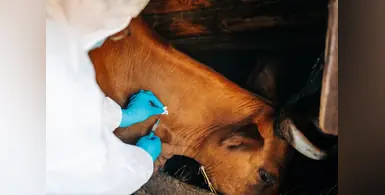
To strengthen control efforts, RAB has ordered that all cattle aged six months and above across Rubavu District be vaccinated every six months. Animals suspected of coming into contact with infected livestock will also be separated and quarantined to curb transmission.

The institution further cautioned that anyone ignoring these prevention measures will face penalties as outlined in Rwanda’s law governing the control of contagious animal diseases.

Local authorities have been called upon to play an active role in enforcing these guidelines. They are urged to conduct regular disinfection campaigns and closely monitor farmers to ensure that no contact occurs between healthy and infected animals.

Foot-and-Mouth Disease is a serious viral infection that affects cloven-hoofed animals and can lead to significant production losses through reduced milk yield, weight loss, and restricted trade opportunities. By acting quickly, the Rwandan government aims to minimise economic losses and maintain the health of livestock, which remains a backbone of many rural households.

RAB’s swift intervention highlights the importance of cooperation between farmers, veterinarians, and local leaders in protecting the nation’s agricultural sector.

FAO is setting a rhythm for global collaboration and accountability in the feed sector.

The global conversation around food security, sustainability, and agriculture just got sharper and it starts with what we’re feeding our animals

The Food and Agriculture Organization (FAO) of the United Nations has kicked off its 2025 Global Forum for Animal Feed and Feed Regulators, placing safe, sustainable feed production at the heart of agricultural transformation.

In a sector worth over US$400bn annually, producing 1 billion tonnes of feed and employing more than 250,000 professionals worldwide, the stakes have never been higher. The message from FAO Director-General QU Dongyu was clear: “This is where the role of feed regulators is crucial and is why FAO has convened this Global Forum for Animal Feed and Feed Regulators.”

Held at FAO headquarters in Rome as part of Livestock Week, the two-day forum brought together policymakers, scientists, producers, and industry experts to address a critical but often overlooked pillar of food production animal feed. The Director-General called for stronger cooperation to boost feed availability, manage grasslands wisely, and reduce the environmental footprint of livestock systems, which are essential to both rural livelihoods and planetary health.

At the heart of the discussions: safety, traceability, and sustainability. Contaminants like mycotoxins, microplastics, and chemical residues don’t just harm animals - they threaten human health, disrupt international trade, and undermine consumer trust. Poorly managed feed chains contribute to deforestation, emissions, and biodiversity loss. And in many regions, feed legislation still lags behind international standards such as the Codex Alimentarius.

“There’s a need for science-based policies and regulations to manage feed systems wisely – protecting health, supporting trade, boosting productivity, and building resilience,” QU Dongyu stated. He also emphasised the importance of inclusivity, ensuring small and medium-sized farmers gain access to safe, affordable feed and services.

This year’s forum builds on momentum from 2023, offering a platform for real-world solutions. Key themes include increasing feed availability through locally-sourced ingredients, such as pasture, grains, and circular economy inputs, and scaling up innovative feed technologies that enhance productivity while lowering environmental costs.

One of the key outcomes? The identification of FAO Reference Centres for Animal Feed – collaborative hubs linking regulators, laboratories, researchers, and private stakeholders to fast-track innovation and global best practices in feed safety.

With plans to host the forum every two years, FAO is setting a rhythm for global collaboration and accountability in the feed sector. For farmers, feed manufacturers, and regulators alike, this marks a vital step toward a more secure, equitable, and climate-smart agricultural future.

More Articles …