





North of Lusaka, along the busy Great North Road, lies Kapiri Mposhi, a farming town blessed with good rainfall and fertile land. Here, maize, wheat, soya beans and tomatoes thrive.
In recent years, farmers in this region have embraced a new way of accessing support from the government through the Farmer Input Support Programme e voucher system.
For many, the change has been life changing. Headwoman Teupula remembers the long journeys she once made to collect farming inputs. Travelling meant extra costs for transport, food and sometimes accommodation. Today, she can buy fertiliser and seed from nearby agro dealers. With more options available, her yields have improved and farming has become less stressful.
For over a decade, Zambia supported farmers through a direct supply model. Under that system, farmers received fixed packs of fertiliser and seed, often unsuitable for their soil. The focus on maize limited choice and, over time, contributed to soil exhaustion. When the country faced a severe drought during the 2023 to 2024 season, many smallholders struggled to cope. The subsidy programme was also placing heavy pressure on public finances.
The e voucher system was first introduced in 17 districts in the 2023 to 2024 farming season, reaching 220,000 farmers. It expanded rapidly to 74 districts in 2024 to 2025, serving around 740,000 farmers. By the 2025 to 2026 season, it is expected to cover all districts and benefit more than one million farmers.
The process is simple. Farmers make a small deposit at a bank, receive confirmation by text message, and use a code to buy inputs from registered agro dealers. According to an independent survey by Kivu International, most farmers report better yields and appreciate the transparency of mobile money systems.
Zacchaeus Saleh Mwale shared his experience: “We are close to one hundred bags. We have food security, and we are able to support our grandchildren.”
Sergiy Zorya of the World Bank Group explained, “This new approach can create markets, generate jobs, diversify crops, and improve nutrition.”
By encouraging private sector participation and giving farmers real choice, Zambia is building a more resilient and productive agricultural future.
Empowering Zambia’s farmers through digital innovation
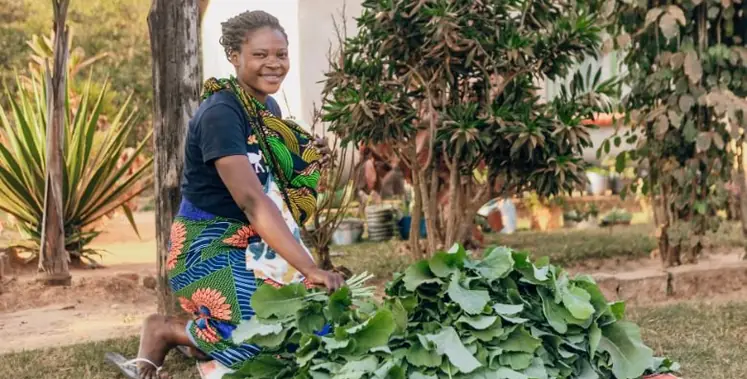
Empowering Zambia’s farmers through digital innovation. (Image credit: World Bank Group)