



The Food and Agriculture Organisation (FAO) of the United Nations has partnered with the Lagos State Ministry of Agriculture and Food Systems to drive strategic investment in Nigeria’s red meat and coconut value chains. This collaboration aims to strengthen the state’s agri-food sector, unlock economic opportunities, and create sustainable jobs, particularly for the youth.
During a roundtable meeting in Lagos on Tuesday, Hussein Gadain, FAO’s representative in Nigeria and ECOWAS, emphasised the strategic importance of Lagos in advancing Nigeria’s food security agenda. Represented at the meeting by FAO programme officer Tofiq Braimah, he praised the Lagos Ministry of Agriculture and Food Systems for demonstrating “bold leadership and unwavering commitment to building a sustainable agri-food system.”
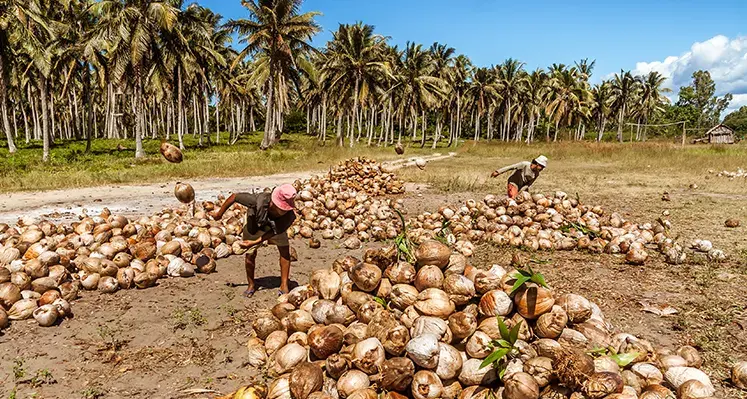
“These value chains include coconut, livestock, and feedlot systems to attract private-sector and multilateral investments,” he said. “By leveraging Lagos’ industrial potential and commercial networks, we aim to unlock new economic opportunities, create decent jobs, and empower the vibrant youth population. This approach positions Lagos to fully exploit AfCFTA opportunities, making it a model for agricultural transformation across Africa.”
Represented by Rasheed Macaulay, director of veterinary services, the Lagos State Ministry of Agriculture and Food Systems reiterated its readiness to drive investment and scale up initiatives that support sustainable agriculture. Permanent Secretary Mr Audu highlighted that FAO’s collaboration reflects a commitment to move beyond policy dialogue to practical, investment-driven solutions for food systems transformation.
The two-day roundtable focused on validating key proposals under the Lagos State Red Meat Initiative and the Coconut Value Chain Programme. These proposals are informed by comprehensive technical and economic analyses conducted through FAO’s Technical Cooperation Project, which included feasibility studies for a Lagos State Cattle Feedlot Farm Estate, and the FAO–UNIDO-supported Coconut Value Chain Programme.
Both programmes have produced detailed investment notes and financial models aimed at mobilising resources and attracting private-sector participation. By leveraging these insights, Lagos is positioned to enhance livestock productivity, optimise coconut production, and integrate value chains with broader industrial and commercial networks.
The FAO–Lagos partnership marks a significant step in sustainable agricultural development, positioning the state as a regional leader in food systems transformation, value chain modernisation, and youth empowerment, while fostering resilience and competitiveness within Africa’s evolving agri-food landscape.
FAO, Lagos boost red meat and coconut investment
FAO, Lagos boost red meat and coconut investment.