





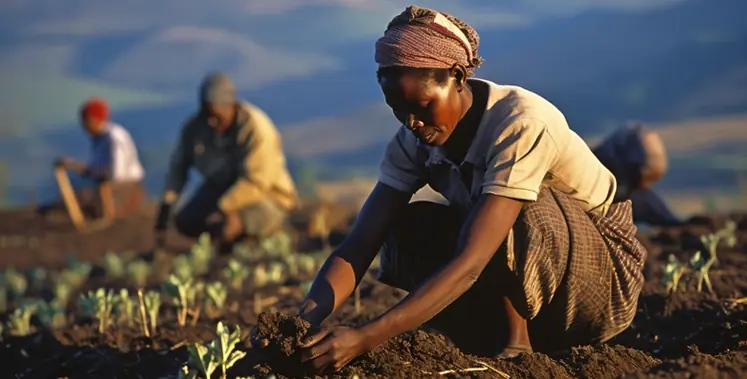
Katsina State in northern Nigeria's State Government has rolled out its 2026 fertiliser distribution programme, aiming to support farmers ahead of the rainy season and improve food production across the state
The initiative will supply subsidised fertiliser to farmers in 6,652 polling units, ensuring wider reach and easier access.
Governor Dikko Radda officially launched the programme in Malumfashi, describing it as part of his administration’s strong focus on food security and better living standards for rural communities. He explained that fertiliser would be sold at a subsidised rate of ₦25,000 per bag. To make the process more transparent and fair, distribution has been decentralised so that genuine farmers can access supplies directly without interference from middlemen.
The governor outlined how the fertiliser would be shared across the state. Funtua Zone is set to receive 60 bags per polling unit, Katsina Zone will get 50 bags, while Daura Zone will receive 45 bags per unit. In addition, 10 large scale farmers in each of the 361 wards will benefit from the programme.
Beyond fertiliser distribution, the government is taking a broader approach to agriculture. This includes providing tractors, hand tillers, irrigation systems and other essential inputs to increase productivity. Governor Radda revealed that more than 3,000 tube wells are currently being drilled at no cost to farmers, while thousands of solar and petrol powered pumps have already been distributed to encourage farming throughout the year.
He also noted that 361 young people are undergoing training in modern farming methods and agribusiness, preparing a new generation to sustain growth in the sector.
The Commissioner for Agriculture, Lawal Aliyu Shargalle, said the programme is part of a wider effort to revive agriculture in the state and assured that strict monitoring would be in place to maintain transparency.
Community Development Programme Coordinator Kamaldeen Kabir praised the governor’s efforts, saying, “His Excellency has, over the years, done tremendous work in improving the livelihoods and strengthening the rural economy of the state,” Kabir said.
He added, “With the introduction of these hand-powered tillers, the situation has improved considerably, making farming easier and more accessible for the common man,” Kabir said.
Nigeria's Katsina launches fertiliser scheme to strengthen 2026 farming season
Katsina launches fertiliser scheme to strengthen 2026 farming season