





Kenya and the United States have moved forward in strengthening their agricultural trade relationship following the first round of consultations on a proposed reciprocal trade framework.
Held in Washington DC, the discussions placed strong emphasis on expanding opportunities within the agricultural sector, which remains central to Kenya’s export economy.
The Kenyan delegation, led by Regina Ombam, engaged with the United States team headed by Osvaldo Gómez Martínez. While the talks covered several areas of trade, agriculture stood out as a key priority, particularly in improving market access, reducing barriers, and increasing value addition.
Trade between Kenya and the United States has seen steady growth in recent years, with agricultural products playing a leading role. Kenyan exports such as coffee, tea, macadamia nuts and fresh cut flowers continue to perform strongly in the US market. These products not only generate foreign exchange but also support millions of farmers and workers across the agricultural value chain.
The consultations also explored ways to improve trade conditions for farmers and agribusinesses. Addressing tariffs and non tariff barriers remains critical in ensuring that Kenyan produce remains competitive. There was also a shared interest in enhancing standards, quality control, and logistics to meet global market demands.
Another important area of discussion was the future of agricultural trade under African Growth and Opportunity Act, which has supported Kenya’s exports to the United States for years. With the programme set to expire in 2026, both countries recognised the need for a new framework that provides certainty for farmers, exporters and investors.
Beyond exports, the talks highlighted opportunities for deeper collaboration in agricultural investment, technology transfer and sustainable farming practices. Strengthening these areas could help improve productivity, resilience and food security.
The meeting concluded with a positive outlook, as both sides expressed commitment to continued engagement. The proposed agreement is expected to create a more stable environment for agricultural trade, opening new opportunities for growth while supporting farmers and agribusinesses in both countries.
Kenya and United States advance agricultural trade talks with new framework
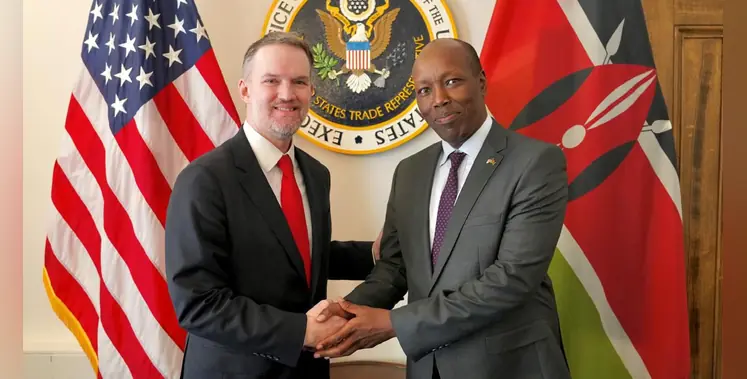
Kenya and United States advance agricultural trade talks with new framework. (Image credit: State Department for Trade)