





Mozambique has set its sights on a future where it no longer depends on costly rice imports, and it is looking to Thailand to help make that vision a reality.
The ambition was laid out clearly at a meeting in Maputo between a Thai business delegation and local leaders, where agricultural cooperation took centre stage and the conversation quickly turned to what it would take to unlock Mozambique's considerable but largely untapped farming potential.
The Confederation of Economic Associations of Mozambique made the case with conviction. The country sits on roughly 36 million hectares of arable land, enjoys plentiful water resources, and benefits from climatic conditions that could support multiple harvests each year. Yet despite these advantages, only a fraction of that capacity is currently being put to work. In the meantime, Mozambique imports hundreds of thousands of tonnes of rice annually, much of it from Thailand itself, a situation that its business community is increasingly eager to reverse.
Amâncio Gume, vice-president of the CTA, was forthright about the opportunity this presents. He argued that a ready domestic market already exists for investors willing to commit to local production, irrigation, mechanisation, and agro-processing. His ambitions stretch further still, with a vision of Mozambique becoming a fully fledged agro-industrial hub serving the wider Southern African Development Community.
Government officials pointed to specific regions ripe for development, including northern coastal areas, the established rice-growing province of Zambézia, and the Chókwè Valley in the south. Mozambique's logistics assets, particularly its internal transport corridors and the deepwater Port of Nacala, were also highlighted as meaningful advantages for scaling up production and reaching export markets.
The Thai delegation responded with genuine enthusiasm. Their offer goes well beyond selling rice. Thailand is positioning itself as a knowledge partner, ready to share expertise across the entire value chain from cultivation and fertiliser use to climate adaptation and processing techniques.
Both sides acknowledged that rising global food costs and supply chain instability have made the case for domestic production stronger than ever. The meeting ended with a networking session focused on identifying concrete joint ventures, and the momentum, at least for now, feels real.
Mozambique looks to Thailand to build a homegrown rice industry
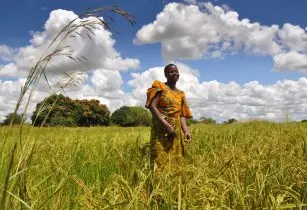
Mozambique Turns to Thailand to Build a Homegrown Rice Industry.