





Nigeria is steadily expanding sugarcane cultivation as part of a broader strategy to reduce its heavy reliance on imported sugar, according to the National Sugar Development Council (NSDC) and the United States Department of Agriculture Foreign Agricultural Service.
The move comes at a time when global sugar production continues to rise, intensifying competition in international markets.
USDA projections estimate that global sugar output will reach about 189.32 million tonnes in the 2025–2026 season, up from 180.75 million tonnes in 2024–2025, representing an increase of nearly five per cent. Against this backdrop, Nigeria is strengthening its domestic production base through land expansion and fresh investment under the second phase of the National Sugar Master Plan (NSMP).
NSDC data show that Nigeria’s harvested sugarcane area expanded from around 75,000 hectares in 2020 to approximately 100,000 hectares by 2025. Over the same period, raw cane output rose sharply from about 1.53 million tonnes to an estimated 3.33 million tonnes. This growth reflects renewed interest from both government and private investors, even as processing capacity remains a key constraint.
Officials at the council described the expansion as a structural shift in the geography of sugar production, driven largely by NSMP Phase Two. The programme targets domestic sugar output of two million tonnes annually by 2033 and is backed by projected investments of about 3.5 billion dollars across farms, mills and supporting infrastructure. Beyond sugar, the plan is designed to support ethanol production, electricity generation, job creation and long-term private sector participation.
At the launch of the Sugarcane Outgrower Development Programme, NSDC Executive Secretary and Chief Executive, Kamar Bakrin, said the initiative would be central to scaling up local cultivation, reducing import dependence and promoting inclusive growth by linking smallholder farmers to major processors. He emphasised the importance of rural participation in strengthening supply chains.
Further details from the Head of Outgrower Management, Mrs Lade Offurum, revealed that the programme will involve large-scale agribusiness operators, organised cooperatives and clusters of individual farmers. About 150,000 hectares nationwide have been identified for outgrower development to support sugar, ethanol, power and animal feed production.
Several states are emerging as hubs for sugar investment, including Niger, Kwara, Adamawa, Nasarawa, Bauchi, Taraba and Oyo. Despite rising cane output, industrial sugar production remains modest, with over 95 per cent of Nigeria’s sugar needs still met through imports. Analysts say the success of NSMP Phase Two will be critical to narrowing this gap and reducing exposure to global price volatility.
Nigeria boosts sugarcane farming to reduce imports
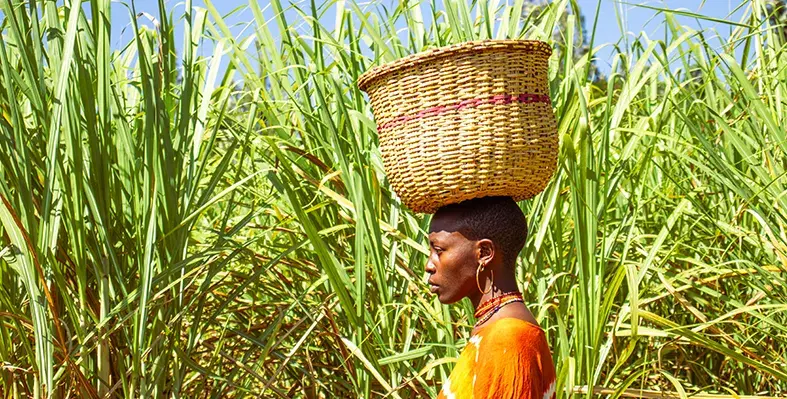
Nigeria is strengthening its domestic production base through land expansion and fresh investment under the second phase of the National Sugar Master Plan (NSMP).