



Nigeria's Federal Ministry of Agriculture and Food Security has revealed that close to 1.9 million bags of fertiliser have reached approximately one million farmers across the country over the past two years, as the government steps up its drive to boost homegrown food production and ease pressure on household food budgets.
Agriculture Minister Abubakar Kyari shared the figures at a quarterly stakeholder engagement in Abuja, attended by journalists, civil society groups, farmers' organisations, development partners and agribusiness representatives. The forum was designed to take stock of the ministry's work and gather fresh ideas on how Nigeria can achieve food sovereignty and wean itself off imported food.
Beyond fertiliser bags, the ministry has also distributed more than 12,000 litres of organic fertiliser and rolled out training for farmers on how to look after their soils sustainably. On the regulatory side, 109 fertiliser inspectors have been trained and deployed, while over 329 industry operators received compliance training. The government has also moved to prosecute those found peddling substandard products.
"We have built a National Reference Laboratory and upgraded the National Fertilizer Management Platform. These measures will improve fertiliser quality control, support compliance with regulations and promote transparency within the supply chain," Kyari said.
A 2025 Agricultural Performance Survey, carried out by the National Agricultural Extension and Research Liaison Services alongside the ministry, showed output gains across rice, maize, sorghum, millet, cowpea, yam and cassava compared to the previous year. Kyari pointed to these numbers as early proof that the interventions are working, adding that food prices have already begun to ease in several parts of the country.
"Our priority is to increase local production and make healthy food accessible to citizens. The impact of our efforts is beginning to reflect in food prices nationwide," he said.
The ministry is focusing heavily on value chains spanning 15 commodities including rice, wheat, cocoa, cassava, soybean, tomato and oil palm, with improved seeds, agrochemicals and pest management support all part of the package.
Information Minister Mohammed Idris backed the initiative, noting that the Tinubu administration remains focused on its Renewed Hope agenda. Permanent Secretary Marcus Ogunbiyi rounded things off by calling for continued collaboration between government, farmers and development partners to keep the momentum going.
Nigeria fertiliser drive reaches one million farmers in two years
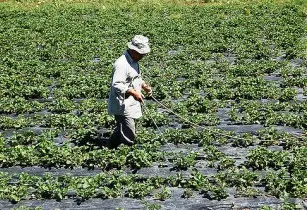
Nigeria Puts Fertiliser at the Heart of Its Food Security Push as Distribution Hits 1.9 Million Bags.