


cc.web.local

twitter linkedin acp contact

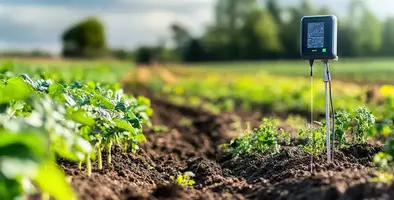
Ghana Opens Timbuktoo AgriTech Hub to Power Digital Agriculture.

Ghana has taken a bold step towards reshaping its agricultural future with the official launch of the Timbuktoo AgriTech Hub, a purpose-built initiative designed to bring digital innovation to the heart of the country's farming sector.

The hub arrives at a time when Africa's agricultural landscape is crying out for practical, technology-driven solutions, and Ghana is positioning itself as a serious contender in leading that charge.

The launch ceremony in Accra drew considerable attention, with the Minister for Communication, Digital Technology and Innovations, Hon. Samuel Nartey George (MP), lending his presence and voice to the occasion. His message to African entrepreneurs was unambiguous: technology holds the key to transforming agriculture and building stronger, more resilient food systems across the continent.

The hub is not operating in isolation. It brings together a compelling mix of innovators, investors, incubators, and ecosystem leaders from across Africa, with partnerships already in place with the United Nations Development Programme, 500 Global, and Seedstars. That kind of backing signals serious intent and gives the initiative a solid foundation from which to grow.

The problems the hub is set up to tackle are well known to anyone familiar with African agriculture. Climate pressures, fragmented supply chains, poor market connectivity, and restricted access to financing continue to hold farmers and agribusinesses back. The Timbuktoo AgriTech Hub aims to chip away at these barriers through data-driven tools, mobile platforms, artificial intelligence, and improved digital infrastructure, all geared towards boosting productivity and expanding market reach.

Beyond supporting startups directly, the hub will run a capacity-building bootcamp for incubator managers, investing in the institutions that nurture early-stage businesses. Access to both catalytic and commercial capital will be made available to participating startups, addressing one of the most persistent obstacles to scaling agricultural innovations across the continent.

The minister rounded off proceedings with a call to action, urging governments, investors, and innovators to work more closely together and turn promising ideas into tangible, lasting development outcomes. It was a fitting note on which to close a launch that felt less like a ceremony and more like the beginning of something genuinely significant.

South Africa Pledges Support for One Million Small Businesses. (Image Credit: Capital business)

South Africa has made a firm public commitment to backing its small business sector, with the government outlining a clear agenda to make it easier and more financially viable for micro, small, and medium-sized enterprises to operate and grow across the country.

The announcement came at the 14th annual Proudly South African Buy Local Summit and Expo held in Johannesburg, where Minister of Small Business Development Stella Ndabeni took to the stage to lay out what the government intends to deliver during its current term in office. The target is an ambitious one: supporting one million MSMEs through a combination of financial assistance and practical non-financial interventions.

The minister was direct about why this matters. "MSMEs play a crucial role in addressing unemployment and inequality in our country," Ndabeni said, adding that the sector employs millions of people and is a major driver of job creation and inclusive growth.

The reform agenda has several moving parts. On the regulatory side, the government is pushing ahead with a red-tape reduction framework and expanding its e-registration system to make the process of starting a business less cumbersome. Administrative burdens at the municipal level have long been a sticking point for small business owners, and these measures are aimed squarely at addressing that frustration.

Access to finance is another priority area. The government plans to deepen its work with development finance institutions, banks, and non-bank lenders to widen the funding pipeline available to small businesses. This will be complemented by stronger post-investment support, helping businesses not just to access capital but to make the most of it once they do.

Legislative progress is also on the cards. "We will continue to improve the business environment, including by advancing the Business Licensing Bill to make it easier to start and operate small businesses," Ndabeni added.

Taken together, the measures paint a picture of a government that recognises small businesses not as a peripheral concern but as a central pillar of economic recovery and long-term inclusive growth. Whether the ambition translates into meaningful change on the ground remains to be seen, but the direction of travel is clear.

Nigeria Puts Fertiliser at the Heart of Its Food Security Push as Distribution Hits 1.9 Million Bags.

Nigeria's Federal Ministry of Agriculture and Food Security has revealed that close to 1.9 million bags of fertiliser have reached approximately one million farmers across the country over the past two years, as the government steps up its drive to boost homegrown food production and ease pressure on household food budgets.

Agriculture Minister Abubakar Kyari shared the figures at a quarterly stakeholder engagement in Abuja, attended by journalists, civil society groups, farmers' organisations, development partners and agribusiness representatives. The forum was designed to take stock of the ministry's work and gather fresh ideas on how Nigeria can achieve food sovereignty and wean itself off imported food.

Beyond fertiliser bags, the ministry has also distributed more than 12,000 litres of organic fertiliser and rolled out training for farmers on how to look after their soils sustainably. On the regulatory side, 109 fertiliser inspectors have been trained and deployed, while over 329 industry operators received compliance training. The government has also moved to prosecute those found peddling substandard products.

"We have built a National Reference Laboratory and upgraded the National Fertilizer Management Platform. These measures will improve fertiliser quality control, support compliance with regulations and promote transparency within the supply chain," Kyari said.

A 2025 Agricultural Performance Survey, carried out by the National Agricultural Extension and Research Liaison Services alongside the ministry, showed output gains across rice, maize, sorghum, millet, cowpea, yam and cassava compared to the previous year. Kyari pointed to these numbers as early proof that the interventions are working, adding that food prices have already begun to ease in several parts of the country.

"Our priority is to increase local production and make healthy food accessible to citizens. The impact of our efforts is beginning to reflect in food prices nationwide," he said.

The ministry is focusing heavily on value chains spanning 15 commodities including rice, wheat, cocoa, cassava, soybean, tomato and oil palm, with improved seeds, agrochemicals and pest management support all part of the package.

Information Minister Mohammed Idris backed the initiative, noting that the Tinubu administration remains focused on its Renewed Hope agenda. Permanent Secretary Marcus Ogunbiyi rounded things off by calling for continued collaboration between government, farmers and development partners to keep the momentum going.

ICRISAT and University of Queensland collaborated to future-proof farming in Africa. (Image credit: ICRISAT)

Across the drylands of Africa, millions of smallholder farmers grow food in some of the most punishing conditions on earth.

Erratic rainfall, punishing heat and increasingly unpredictable growing seasons make every harvest a gamble. Now, two of the world's leading agricultural research institutions are joining forces to change that.

The International Crops Research Institute for the Semi-Arid Tropics (ICRISAT) and The University of Queensland (UQ) in Australia have formalised a strategic partnership aimed at bringing the latest predictive breeding technologies directly into crop improvement programmes serving dryland farming communities. A Memorandum of Understanding signed between ICRISAT and UQ's ARC Training Centre in Predictive Breeding for Agricultural Futures sets the foundation for what could be a transformative shift in how new crop varieties are developed for the world's most food-insecure regions.

At its core, the collaboration is about speed and precision. Traditional crop breeding is a long game, often taking well over a decade to move from a promising genetic combination to a variety that farmers can actually grow. Predictive breeding collapses that timeline by using genomic data to identify which plants are most likely to thrive before they are ever put in the ground. For communities already feeling the weight of climate change, that difference can be measured in meals.

 Himanshu Pathak, Director General of ICRISAT, said,"Dryland agriculture is on the frontline of climate change. Farmers in these regions cannot wait decades for improved crop varieties. Predictive breeding allows us to anticipate which genetic combinations will perform best before they are even field-tested. Through collaboration with one of the world's leading centres for predictive breeding at the University of Queensland, we are accelerating the delivery of climate-resilient crops that farmers urgently need to sustain productivity, nutrition, and livelihoods." 

ICRISAT already has strong foundations to build on. The institute has contributed to the release of over 1,200 improved crop varieties across more than 40 countries, and has been rolling out rapid breeding cycle protocols for crops including chickpea, pigeonpea and finger millet. The new partnership is expected to further sharpen those efforts, with genomic prediction woven into existing pipelines to deliver varieties capable of achieving yield gains of 20 to 25 per cent under drought and heat stress.

"This partnership is a fantastic opportunity to put cutting-edge predictive breeding tools into the hands of ICRISAT's breeders. Beyond the technology itself, building local capacity to implement and adapt these approaches is critical and will help ensure long-term impact for farmers across India and Africa," said Professor Lee Hickey, Director of the ARC Training Centre.

The collaboration will be coordinated by Dr Janila Pasupuleti, who will lead the development of a transition strategy to embed rapid-cycle genomic prediction across ICRISAT's breeding programmes. For farming communities across sub-Saharan Africa and South Asia, it represents something simple but profound: better seeds, sooner.

EuroTier 2026 Puts Forage Production in the Spotlight With New Forage Days and Smart-Farming Showcase. (Image credit: DLG)

Forage production takes center stage at EuroTier 2026, scheduled for November 10-13, 2026, in Hanover, Germany.

Organized under the guiding theme "Intelligence in Animal Farming," the event will feature a dedicated DLG Spotlight on Forage Production alongside the newly launched Forage Days on November 12 and 13 marking a significant expansion in programming for ruminant nutrition professionals, forage specialists and equipment manufacturers worldwide.

Forage quality directly determines the profitability and productivity of ruminant herds. Despite this, measurable losses continue to occur at every stage of the forage chain from field to feedbunk. Bridging that gap is the central mission of EuroTier 2026's forage programming.

High-performing dairy and beef operations depend on a steady supply of consistent, nutrient-dense forage. Research consistently demonstrates that premium forage quality reduces reliance on purchased concentrate feeds, lowers input costs and improves overall feed efficiency outcomes that directly affect a farm's bottom line.

Achieving stable forage quality calls for well-coordinated machinery and tight process management at each production stage: harvesting, preservation, storage and daily feeding. Fast, low-loss operations -- such as completing ensiling within 24 hours and ensuring rapid drying during haymaking are critical benchmarks that leading producers are working toward.

Modern sensors, compaction monitoring and airtight covering systems are enabling a new generation of precision forage management. Properly adjusted equipment minimizes contamination risk and fermentation inconsistencies, while low-emission manure application and verified silage additives support both forage hygiene and storage stability.

At the feedout stage, clean face management, appropriate daily advance rates and fresh-feed protocols prevent reheating and aerobic spoilage factors that can quietly erode the nutritional value of even well-made silages.

The curated DLG Spotlight on Forage Production will bring together exhibitors from across the equipment, technology and agronomy sectors to demonstrate how digital and smart-farming tools can optimize forage quality at every stage of the production chain from initial cutting through to ensiling. The dedicated DLG Expert Stage Ruminants will complement this showcase with targeted content on needs-based feeding strategies for dairy and beef operations.

The new Forage Days on November 12 and 13 extend the programming to offer deeper technical engagement, providing attendees access to expert-led discussions, live equipment demonstrations and direct networking with forage specialists from across the industry.

More Articles …