Uganda is targeting annual cocoa production of 500,000 tonnes by 2036 under a new ten-year strategy aimed at improving farm productivity, expanding domestic processing and increasing the value generated from cocoa exports
The Uganda Climate Resilient Cocoa Development Strategy (2026–2036), launched by the Ministry of Agriculture, Animal Industry and Fisheries (MAAIF) in November, sets out a framework for investment and coordinated development across the country's cocoa value chain. The initiative was developed with support from the Food and Agriculture Organization of the United Nations (FAO), the Belgian Agency for International Cooperation (Enabel) and other sector partners.
Cocoa has become an increasingly important source of export revenue for Uganda. Earnings rose from US$70.6 million in the 2015/16 financial year to US$620.4 million in 2024/25, supporting more than 100,000 cocoa-growing households. The crop is now the country's second-largest agricultural export earner after coffee.
Raising output and farm productivity
The strategy aims to increase annual production from approximately 72,000 tonnes to 500,000 tonnes over the next decade. Average yields are also expected to rise from 530 kg to 1,000 kg per hectare, reflecting the need to improve output from existing cocoa-growing areas alongside expanding cultivation.
Reaching the targets will require action on several constraints affecting farmers. Low productivity, inadequate post-harvest handling, limited access to finance and weak farmer organisations continue to restrict the sector's development. The strategy therefore prioritises improved planting materials, research, climate-smart cultivation, and stronger coordination between producers and other value chain participants.
Climate resilience is another central focus. Agroforestry and sustainable land management are among the proposed approaches to help cocoa-growing communities manage changing climatic conditions while protecting the natural resources needed for long-term production. The framework also recognises the importance of traceability and deforestation-free production in maintaining access to international markets.
Expanding local processing and value addition
Increasing bean production alone will not deliver the full economic benefits envisaged by the government. Less than five per cent of Uganda's cocoa is currently processed domestically, leaving much of the potential value addition outside the country.
The strategy seeks to raise the share of national production processed locally to 30 per cent by 2036. Planned investment in fermentation, drying, aggregation and industrial processing, including cocoa liquor and chocolate manufacturing, is expected to strengthen domestic capacity.
A larger processing industry could create opportunities for manufacturers, traders and service providers while improving market options for cocoa farmers. Better post-harvest handling will also be important for maintaining bean quality and meeting buyer requirements. The government is targeting annual cocoa export earnings of US$3 billion by the end of the strategy period.
Investment needed to deliver the targets
Implementing the ten-year framework is expected to require US$221.19 million in public and catalytic investment. The strategy also calls for private-sector participation, alongside contributions from government, development partners, research institutions, financial institutions, and farmer organisations.
Dr John Lodungokol, Acting Commissioner for Crop Production and Protection at MAAIF, said the immediate priority was to strengthen coordination across the value chain, mobilise investment and equip farmers and processors to contribute to the sector's expansion.
FAO supported the strategy's development through its Technical Cooperation Programme on strengthening Uganda's capacity for climate-resilient cocoa value chain development. Following the national launch, regional engagements are planned in Eastern, Western and Northern Uganda to build awareness, encourage local ownership and identify implementation priorities.
The strategy also aims to increase the participation of women and young people in the cocoa value chain to at least 45 per cent. Achieving the wider production and export ambitions will depend on whether improved planting materials, financing, technical services and processing facilities reach growers and businesses.
Uganda's cocoa industry has already recorded substantial export growth, but the next phase will require stronger farm-level productivity and greater domestic capacity to handle and process the crop. Delivering both will determine whether the 2036 strategy can translate rising cocoa production into better returns for farming households and a more developed national industry.
Uganda targets 500,000 tonnes of cocoa production by 2036
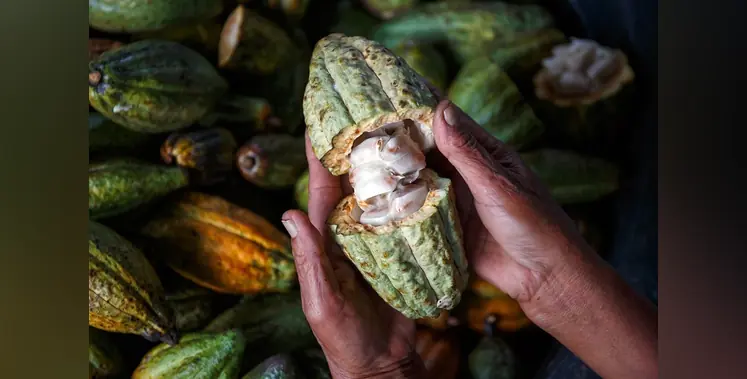
The Uganda Climate Resilient Cocoa Development Strategy (2026–2036), launched by the Ministry of Agriculture, Animal Industry and Fisheries (MAAIF) in November, sets out a framework for investment and coordinated development across the country's cocoa value chain.