



“Africa’s livestock sector already contributes over USD 210 billion annually, yet we continue to import products we could produce ourselves. The question is whether we will seize the billion-dollar opportunity before us.” This message from Huyam Salih, Director of AU-IBAR, framed the urgency of transforming Africa’s livestock systems during the panel discussion on “Resilience in the Animal Industry” at the ICC Kenya Business Summit 2026 in Nairobi.
Her remarks brought into focus a striking reality. Africa is home to one of the largest livestock populations in the world, yet the sector remains fragmented and underfunded. Much of its potential is untapped, and many systems are not fully connected to competitive regional and global markets. While livestock already plays a significant economic role, it has not yet reached the level of organisation and investment needed to drive broader transformation.
The livestock discussion formed part of a wider summit programme that examined what Africa must do to reshape its economic future. Conversations covered sustainable agriculture, precision farming, digital trade, sustainable finance and green infrastructure. Across these themes, one message stood out. Production alone is not enough. Africa must build integrated systems that connect farmers to markets, finance, technology and infrastructure.
Speakers stressed the need to strengthen agricultural value chains, improve access to finance and attract greater private sector participation. Digital tools were identified as essential in simplifying trade processes, increasing transparency and widening market access. At the same time, sustainable finance was seen as critical in unlocking long term investment through stronger collaboration between governments, financial institutions and investors.
Within this broader context, Salih emphasised that livestock must move beyond subsistence activity and be recognised as a structured and investable sector. She called for stronger animal health systems, better feed and genetics, improved processing capacity and deeper integration of production, processing and trade.
Through its continental mandate, the African Union InterAfrican Bureau for Animal Resources supports Member States in modernising livestock systems. This includes strengthening veterinary services, improving disease control and facilitating safe regional trade. Such efforts protect livelihoods while opening doors to larger markets and increased private investment.
Salih also highlighted the importance of climate smart livestock systems that boost productivity while reducing environmental pressure. With rising demand for animal protein and vast livestock resources, Africa holds a strong foundation for growth.
The summit made it clear that livestock can be a powerful driver of food security, employment and trade competitiveness. The opportunity is evident. Turning that opportunity into tangible results will depend on coordinated action, sustained investment and a shared commitment to building resilient and competitive systems across the continent.
Unlocking Africa’s livestock potential for economic growth
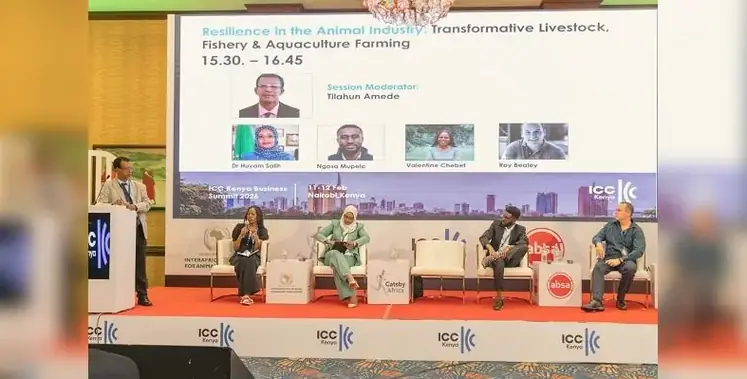
Africa is home to one of the largest livestock populations in the world, yet the sector remains fragmented and underfunded. (Image credit: AU-IBAR)