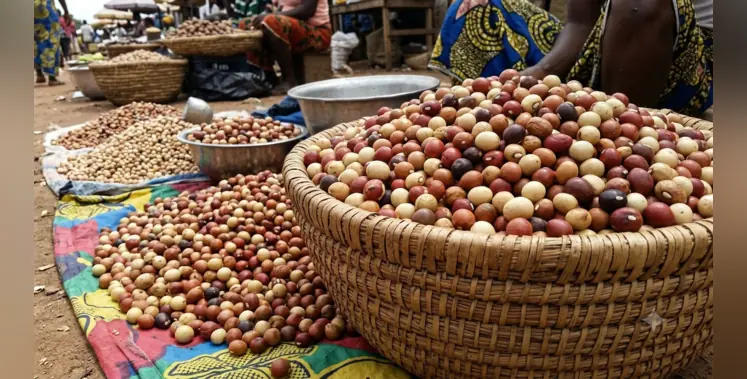
Bambara groundnuts, an underrated African crop, can potentially diversify crop production and significantly contribute to food security, as per scientists' studies conducted on indigenous crops
Simulate 49 growing seasons based on 50 years of climate and soil data, scientists have found October to be the ideal time for the highest yields as it marks the onset of monsoon in the region. Planting any later than that exposes the crop to frost, reducing growth potential.
As climate change and drought are increasingly affecting the growth of mainstream crops like maize, wheat and rice, indigenous crops are emerging as the best alternatives because of its high drought tolerance capacity.
Crops like bambara groundnuts (Vigna subterranea) are nutrient-rich, carrying vital minerals, including fiber, protein and zinc, iron and calcium.
Researcher Richard Kunz stressed on the urgency of educating farmers about different kinds of indigenous crops to build climate resilience.
Using the Food and Agriculture Organization AquaCrop model, the scientists simulated growing conditions across 5,838 altitude zones in South Africa, Lesotho and Eswatini, accounting for daily rainfall, air temperature, water retention, planting dates and plant density. The model analyzed growing seasons from 1950 to 1999.
“Our research stops smallholders from gambling their livelihoods on land suitability maps based on long-term climate averages, giving them and extension officers practical advice to ensure reliable crop production,” Kunz said.
Indigenous crops building climate resilience in Africa