




Africa must strengthen its capacity to produce quality seed and ensure farmers receive the investment and support needed to build a more secure and self-reliant food future
This was the central message from His Majesty King Mswati III and African Union Commission (AUC) deputy chairperson H.E. ambassador Selma Malika Haddadi at the inaugural Africa Seed Summit in Ezulwini, Kingdom of Eswatini.
Their addresses linked Africa’s agricultural ambitions to the needs of farmers seeking reliable harvests, young people looking for economic opportunities, and households requiring a dependable supply of nutritious food.
Officially opening the Summit on 6 October 2026, His Majesty emphasised that seed is fundamental to Africa’s food sovereignty. He highlighted how decisions about seed production, ownership and investment will influence the continent’s agricultural future.
“No fertilizer, irrigation or machinery can make up for poor seed,” His Majesty said.
Convened by the African Union Commission and hosted by the Kingdom of Eswatini from 5 to 7 October 2026, the Summit was held under the theme “Resilient Seed Systems for a Food Secure Africa”.
Building Africa’s capacity to feed itself
His Majesty urged African countries to build on their agricultural strengths and collaborate to increase the continent’s food production.
“Each nation must maximise the crops for which it is best suited and where one country shows particular strength, the other Member States must support it, because all of us are Africans. In the end, what we want is to see a successful Africa that is food secure,” he said.
He outlined a coordinated approach involving soil testing, investment in dams and irrigation, improved storage facilities and transport links to facilitate food movement between African markets. He also highlighted the role of the African Continental Free Trade Area and called on financial institutions and development partners to support viable agricultural projects.
His Majesty emphasised the need to conserve Africa’s indigenous genetic resources and develop climate-resilient crop varieties. These efforts would help farmers address drought, pests and other production challenges while preserving resources for future generations.
Drawing on Eswatini’s experience, he highlighted improvements to the national gene bank, efforts to multiply seed and germplasm, and training that had enabled some farmer groups to begin small-scale seed production. He also welcomed further investment and knowledge-sharing with other African countries.
He urged Member States to ensure that agreed programmes translate into practical results.
“Frameworks that remain on paper feed no one,” His Majesty said.
Making progress count for farmers
Ambassador Haddadi, representing AUC Chairperson H.E. Mahmoud Ali Youssouf, emphasised that implementation must prioritise farmers’ access to quality seed.
She called for investment in research, plant breeding, seed testing, certification and extension services, alongside support for seed enterprises capable of reaching farmers more effectively.
Many farmers continue to face difficulties obtaining suitable seed before planting at affordable prices. Addressing this challenge requires stronger institutions and reliable services, while creating opportunities for women and young people to participate in seed production, innovation and business.
Ambassador Haddadi also urged governments and development partners to strengthen connections between formal and farmer-managed seed systems, recognising their respective contributions to agricultural production, biodiversity and rural livelihoods.
“Let us therefore leave Ezulwini with renewed determination to translate commitments into action, partnerships into investments, and strategies into measurable results,” she said.
Her message highlighted the importance of measuring continental progress through tangible improvements in farmers’ fields, incomes and resilience.
Turning shared ambitions into action
The Ezulwini Outcome Document, adopted by ministers, establishes commitments to improve affordable and timely access to quality seed and planting materials, particularly for smallholder farmers, women and young people.
The commitments include increased investment in plant breeding, research and seed enterprises, alongside support for productive, nutritious and climate-resilient crop varieties that meet farmers’ needs.
The document also recognises farmer-managed seed systems as an essential component of Africa’s agricultural capacity. It calls for support for community seed banks, farmer networks and local enterprises, the protection of farmers’ rights, and the fair sharing of benefits arising from genetic resources and traditional knowledge.
Ministers also requested the development of an integrated African Seed and Gene Bank System, including a continental institution working alongside national and regional gene banks. The proposed system is intended to strengthen conservation and support the use of Africa’s plant genetic resources in research and future agricultural production.
Efforts to harmonise seed policies and standards and reduce barriers to intra-African seed trade are intended to improve access to quality seed across national borders. Ministers also called for increased public and private investment, coordinated implementation and regular monitoring of progress.
The outcome document and its recommendations will be submitted through the appropriate African Union policy organs for consideration, validation and formal endorsement.
At the closing ceremony, H.E. Moses Vilakati, AUC Commissioner for Agriculture, Rural Development, Blue Economy and Sustainable Environment, welcomed the consensus reached on recommendations to guide the next phase of work to strengthen Africa’s seed systems.
He described the adopted document as the beginning of a new implementation phase and a roadmap for collaboration among the African Union Commission, Member States, Regional Economic Communities, development partners, research institutions, farmers’ organisations and the private sector.
African Union calls for investment in quality seed production
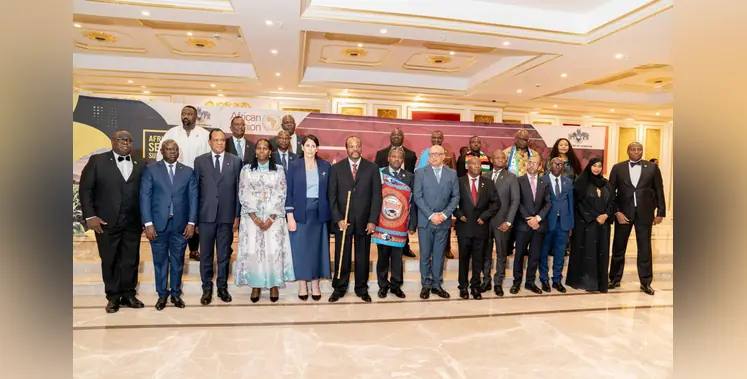
Africa’s seed summit calls for greater investment, climate-resilient crops and improved access to quality seeds for farmers. (Image source: African Union)