



The International Livestock Research Institute (ILRI) and the African Union Inter-African Bureau for Animal Resources (AU-IBAR) convened while AGRA hosted a roundtable at the Africa Food Systems Forum in Kigali, Rwanda
Ministers or their representatives from Nigeria, Uganda, Niger, Mali, Malawi, Rwanda and Ethiopia as well as Mokgweetsi Eric Keabetswe Masisi, former President of Botswana, participated in the session. The Ministers expressed their desire to collaborate in areas of livestock value chains, unlock investment, expand market and trade, and build partnerships needed to scale livestock solutions across the continent.
The collaboration will address a widening gap between Africa’s potential and its performance. Even after owning a notable portion of the world's resources, Africa has to spend nearly US$100bn on food imports annually. Meanwhile, animal-source foods are the most expensive food group for Africans, for whom healthy diets are the furthest out of reach, with demand projected to grow 280 percent by 2050.
What can be the most promising interventions for improving livestock productivity were discussed at the meeting. Topics included livestock genetics to quality feed and animal health initiatives, as well as what large-scale delivery actually requires, and the conditions needed to move from livestock plans to implementation.
“Clearly Africa doesn’t lack solutions for its livestock sector. What it lacks is scale and productivity. Closing this gap between what Africa produces and what it imports is the key to delivering on the promise of the continent’s $1trillion annual agribusiness potential,” said Appolinaire Djikeng, ILRI Director General. “Today’s commitments show ministers are ready to move from proven innovations to the investment and regional trade that turn them into a continent-wide blueprint for self-reliance.”
“Africa does not lack livestock potential. We do not lack animals. We do not lack farmers. We do not lack science and technical knowledge. We certainly do not lack demand. And, increasingly, we do not lack policy recognition. What we have lacked is the ability to connect all these pieces and deliver at scale. Africa’s livestock priority is no longer recognition. It is delivery,” explained Professor Lindiwe Majele Sibanda, Chair of Council Zimbabwe National University of Science and Technology, extraordinary Professor University of Pretoria, Co-Chair Food Planet Prize.
“We already know what works. The task now is coordinating policy and trade across borders, so proven livestock solutions can scale from one country to a continent. That is what the Integrated Regional Livestock Value Chain program is built to do, and what today’s commitments move us closer to,” said Dr. Huyam Salih, Director of the African Union Inter-African Bureau for Animal Resources (AU-IBAR).
African ministers keen on collaboration to scale livestock solutions
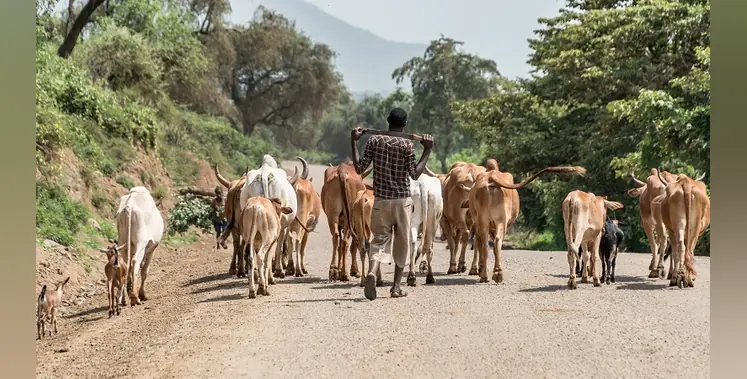
Africa is willing to coordinate policy and trade across borders.