





Global dairy giant Arla Foods has stepped up its commitment to transforming Nigeria’s dairy industry, unveiling a long-term strategy to source 50 per cent of its milk locally while importing the remaining half from Europe.
The ambitious plan is aimed at cutting reliance on imports, strengthening domestic production and supporting Nigeria’s growing demand for nutritious dairy products.
The company restated this vision at the 2025 Arla-Dano Farm Open Day, where it highlighted strategic investments designed to position the dairy sector as a catalyst for improved nutrition, sustainable livelihoods and national food security. According to Arla, its approach is firmly rooted in sustainability, local capacity development and continuous knowledge transfer across the entire dairy value chain.
At the heart of this initiative is the Arla-Dano Farm in Damau, Kaduna State, a modern, world-class dairy facility regarded as one of the most advanced in West Africa. The farm features cutting-edge cow-monitoring technology, prioritises animal welfare through free-range housing and sand bedding, and uses specialised cooling systems. Solar-powered milk cooling further ensures optimal quality while supporting renewable energy adoption.
To enhance local value addition, Arla has also commissioned a yoghurt factory adjacent to the farm. The facility produces Cool Cow yoghurt made with 100 per cent fresh milk sourced directly from the Damau operation. The company says this marks a major step towards processing raw milk into high-quality, locally made dairy products for Nigerian consumers, while boosting confidence in home-grown brands.
Beyond production, Arla is investing heavily in human capital through the Nigerian Dairy Centre of Excellence, launched during the open day. The centre serves as a national hub for training, research and innovation, targeting farmers, students, veterinarians and industry professionals to professionalise dairy farming and build a skilled workforce.
Sustainability remains central to operations at Damau. Arla reports that current milk yields average 30 kilogrammes per cow per day, with plans to increase output to 35 kilogrammes, significantly lowering the carbon footprint per litre of milk. The farm also uses solar energy, recycles manure as fertiliser and applies efficient irrigation systems.
Looking ahead, Arla plans to expand local milk sourcing, strengthen partnerships and scale up training and technology investments. The company reaffirmed its goal of achieving a 50–50 balance between locally produced milk and European imports within the next decade, reinforcing its long-term commitment to food security, economic empowerment and a resilient Nigerian dairy value chain.
Arla Foods revolutionising Nigeria's dairy sector
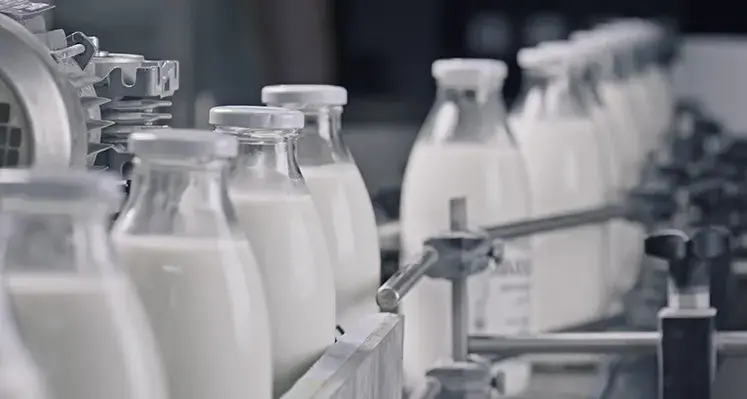
Arla Foods revolutionising Nigeria's dairy sector.