Morocco is considering a six-year programme to restore its dairy cattle population to more than 1.5 million, after numbers fell to between 600,000 and 650,000
The scale of the decline was outlined by Agriculture Minister Khalid Hatimy before the House of Representatives on 23 November 2026. He also reported that the country’s cattle and sheep populations had fallen by approximately 40% to 50%, although he did not specify the period covered by the comparison.
Rebuilding the herd will require more than bringing animals into the country. The government’s proposed six-year initiative combines import support with measures aimed at improving production capacity, financing and the conditions in which livestock farmers operate. The intention is to replenish national stocks by importing at least 30,000 cows annually while strengthening the domestic sector's ability to produce milk and meat.
Import costs shape the recovery plan
The proposed annual import target reflects the scale of the gap in Morocco’s dairy herd. However, the cost of acquiring animals presents a significant constraint. Hatimy said a dairy cow can cost up to MAD40,000 in Morocco’s usual supply markets, making the choice of import sources an important consideration.
The ministry is therefore looking to diversify those markets to reduce acquisition costs. Alongside import support, the programme would encourage domestic reproduction and the use of modern genetic improvement techniques. Together, the measures are intended to increase the availability and quality of breeding stock rather than make herd recovery dependent on imports alone.
Investment in larger dairy production and cattle fattening units also forms part of the proposal. Improved access to financing is expected to support such investment and help expand production. The strategy thus links the immediate need to replenish livestock numbers with the longer-term task of increasing the capacity of farms and production units.
Smaller farms remain part of the equation
The recovery effort is also intended to reach small and medium-sized livestock farmers, who account for the majority of the country’s livestock producers, according to Hatimy. The ministry is considering targeted support to improve their production capacity, as well as stronger collaboration with professional organisations.
Their role is particularly relevant to dairy production, where the cost of acquiring animals can place substantial pressure on smaller operations. Making breeding stock more affordable and improving access to finance could influence how widely the recovery programme benefits farmers. Better use of existing farm resources can also contribute to production economics. In Morocco and other markets, for instance, a partnership between Sistema.bio and Danone has supported smallholder dairy farmers through biodigesters for manure management, renewable energy and organic fertiliser.
The ministry is also preparing a livestock framework law and a decree concerning powdered milk. Hatimy said the latter could contribute indirectly to herd recovery. These policy measures sit alongside the proposed financial and production support, although details of the programme’s implementation have yet to be set out.
Livestock recovery and red meat prices
The announcement also comes as Morocco seeks to address the cost of red meat. Hatimy put post-slaughter marketing margins at MAD15–25 per kg, while the government aims to reduce them to MAD10–15 per kg.
To improve transparency in the market, a joint circular is being prepared with the ministries of Interior and of Industry and Trade. It would require retailers to display meat prices and indicate whether products are locally produced or imported.
Hatimy estimated Morocco’s annual market requirements at 750,000–800,000 cattle. The figure reflects the broader scale of the country’s livestock supply needs, while the proposed target of more than 1.5 million relates specifically to rebuilding the dairy cow population.
For the ministry, the immediate challenge is to make replacement animals more accessible without losing sight of the domestic breeding base. With acquisition costs per dairy cow skyrocketing in established supply markets, the effort to find more affordable sources will be closely tied to how quickly farmers can rebuild their herds.
Morocco plans six-year cattle herd recovery programme
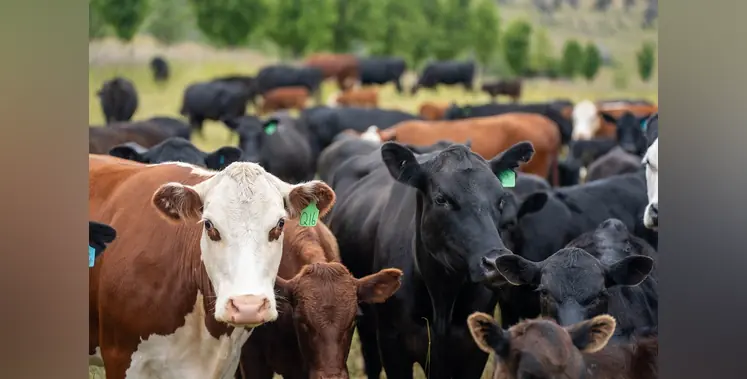
The Moroccan government’s proposed six-year plan aims to rebuild the country’s dairy herd through annual cattle imports, improved domestic breeding and greater financial support for livestock farmers.