

cb.web.local

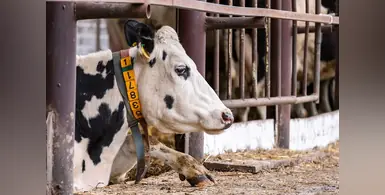
Senegal has partnered with FAO to address livestock theft.

As part of National Integrated Livestock Development Programme (PNDIES), Senegal will be initiating a digital identification and traceability network pilot for farm animals 

The approximately US$1.7mn programme will involve the use of electronic chips, ear tags and connected collars to establish a strong livestock network, informed PNDIES coordinator, Dame Sow. 

This is anticipated to bring about a positive change in Senegal's livestock scene which has been frequently dealing with theft challenges. Data from the Food and Agriculture Organization (FAO) reveals that between 22,000 and 30,000 animals are stolen annually, driving financial losses to roughly $3.2 million every year. 

With the support of FAO, Senegal addressed the challenge by setting up community intelligence networks alongside a validated National Livestock Identification and Traceability System. The project saw the involvement of local tech start-ups for the deployment of IoT monitoring tools and a costed execution plan. 

Identifying that the reach of the problem extended beyond borders, Senegal partnered with FAO in February to host delegates from 15 West African nations in Dakar. The outcome of the session was a proposal for a cross-border initiative focused on digital tracking, early warning networks, and unified judicial frameworks.

In April 2026, the Regional Veterinary Committee adopted a roadmap to standardize digital identification systems across member states—aiming to curb theft while simultaneously smoothing regional trade, managing transhumance routes, and easing pastoral conflicts.

Moving forward, Senegal's primary hurdle will be executing these legal frameworks and digital tools effectively on the ground.
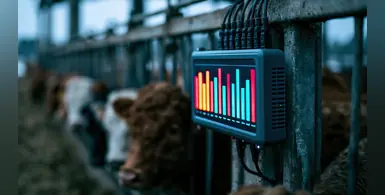
Intraco has collaborated with Prognosis for rapid mycotoxin detection.

In a move to strengthen its Detect & Protect mycotoxin management strategy, Intraco has added two new offerings to the Intra Toxinbind Xpro range -- Intra Toxinbind Xpro Plus and Intra Toxinbind Xpro Premium

The company has also collaborated with Prognosis for rapid mycotoxin detection. These developments equip Intraco to support faster identification of mycotoxin risks before it can adversely affect animal health and performance.

The company taps the growing demand for reliable detection and targeted mitigation tools as a result of increased mycotoxin pressure on livestock production. The Prognosis and Toxinbind offerings make up a complete package to address mycotoxin risks, with rapid screening solutions ensuring quick decision making when it comes to feed ingredients and raw materials assessment.

"Our customers tell us that mycotoxin challenges are becoming increasingly complex and less predictable, with a growing negative impact on animal performance, health, and profitability,' said Julie Feyaerts, global portfolio manager.

"Based on customer feedback, we see that the most important factors in assessing mycotoxin risk are the origin of raw materials, climatic conditions during cultivation and harvest, and the subsequent processing and storage conditions. Together with flock observations such as reduced growth performance, increased mortality, or gut health challenges, these factors help determine the most appropriate mycotoxin management strategy.

"To support our customers, we have strengthened our mycotoxin management approach in three ways. First, we help customers evaluate their mycotoxin risk based on raw material sourcing and flock observations. Second, we now offer rapid mycotoxin screening of raw materials through our partnership with Prognosis, providing a valuable quality check of suppliers and an additional decision-making tool. Third, we have expanded the Intra Toxinbind range with the introduction of Intra Toxinbind Xpro Plus and Intra Toxinbind Xpro Premium, completing our portfolio and allowing customers to select the most appropriate strategy for their specific mycotoxin risk and animal needs.

"By combining rapid detection, technical expertise, and a graded portfolio based on adsorption, bioprotection, and detoxification, we help customers apply the right level of protection locally, safeguarding animal health and performance while optimizing return on investment," Feyaerts said.

With this expanded offering, Intraco provides customers with practical tools, proven protection solutions and expert guidance, delivering a comprehensive Detect & Protect strategy tailored to local challenges and customer needs.

Cagemax considers quality the key to success. (Image source: Cagemax)

Cagemax from the Netherlands fulfills an important role as supplier of high-quality animal proteins and fats

In recent years, Cagemax hasn’t only grown its own worldwide business, but also its clients in the aquafeed, compound feed, fertilizers, bioenergy and pet food sectors. Growth is an important theme for Cagemax.

Contributing to the healthy development of many animals worldwide through an assortment of proteins and fats. The company is recognised as a flexible partner that easily adapts to both changing legislations and dynamic market demand. Because one thing never changes: the market calls for quality, competitive pricing and optimal delivery reliability.

Reliable

Where the needs remain the same, the dynamics are constantly moving. Cagemax is the stable factor in a market that’s always changing. Constantly deploying its expertise and extensive network to offer a good price and exceptional quality. Logistics have been mastered down to the last detail and proprietary storage and transshipment facilities are in place. Enabling the team to always meet the fluctuating market demand.

Cagemax stays in direct and continuous contact with many manufacturers so they can always offer customers the choice between different qualities and origins. Tailor-made. Not just in its product range, but also in advice.

The experts are always on top of industry trends and know their products like no other.

Dynamic

This knowledge and expertise were initially limited to ingredients for the pet food industry. Over the years, the business has also expanded its scope to the compound feed, aquafeed, fertiliser and bioenergy industries. On the supply side, Cagemax is able to purchase large volumes. On the demand side, customers can count on an attentive service and high-quality raw materials. The company can cope with the dynamics of the market and has thus managed to bind customers worldwide. Because of the understanding that if you want to be irreplaceable, you must continue to distinguish yourself.

Cagemax understands like no other that quality is the key to success and the continuity of the business. That’s why the company is GMP+ certified and operates in full compliance with the HACCP principles and practices.

Every market has its own quality requirements. For the supply of raw materials for the bioenergy industry, Cagemax has been certified to meet the strict ISCC-EU standards with a SKAL-certificate that guarantees that the delivered biological or bio-organic products are produced under the European and production directives.

We stand for constant product quality. That’s why every incoming load is carefully analysed in an accredited laboratory.

With an eye for quality, delivery, reliability, flexibility and the will to think along with relations, Cagemax has grown out to be the biggest supplier of high-quality animal proteins and fats in Europe.

BAITS3 deliver comparatively nuanced animal registration and traceability.

Veterinary authorities are deploying the Botswana Animal Information and Traceability System (BAITS) to accelerate monitoring of livestock movement as cases of foot-and-mouth disease (FMD) become apparent in Kgatleng District

The BAITS system supports the management of movement with revised movement controls. Movement management depends on animal identification, traceability, veterinary checks and other disease-control requirements. The system helps in tracking livestock registration and ownership records.

The system allows veterinary authorities to verify an animal’s registered ownership and location and to support movement controls alongside vaccination records, quarantine measures and veterinary inspections. 

BAITS2 is now upgraded to BAITS3 to deliver comparatively nuanced animal registration and traceability. BAITS3 is also digitally equipped to support livestock owners in registering animals, recording ownership transfers and arrivals, reporting deaths and updating veterinary information. 

BAITS3 is central to Botswana’s broader FMD-control approach, which involves zoning, vaccination, quarantine, surveillance and restrictions on animal movement. This practice aligns with the vision of World Organisation for Animal Health.

The Ministry of Lands and Agriculture has advised farmers to update livestock records and ensure animals carry required identification, including ear tags and brands. This helps to check rapid spreading by localising disease risks within specific control zones. 

The Ministry is prioritising precautionary measures against suspected FMD cases at several crushes in the Oodi and Mochudi extension areas. It has initiated investigations and prohibited livestock movements in Disease Control Zone 11, except within the designated containment area, and imposed additional restrictions in Zones 3, 8, 9 and 10.


Africa is willing to coordinate policy and trade across borders.

The International Livestock Research Institute (ILRI) and the African Union Inter-African Bureau for Animal Resources (AU-IBAR) convened while AGRA hosted a roundtable at the Africa Food Systems Forum in Kigali, Rwanda

Ministers or their representatives from Nigeria, Uganda, Niger, Mali, Malawi, Rwanda and Ethiopia as well as Mokgweetsi Eric Keabetswe Masisi, former President of Botswana, participated in the session. The Ministers expressed their desire to collaborate in areas of livestock value chains, unlock investment, expand market and trade, and build partnerships needed to scale livestock solutions across the continent.

The collaboration will address a widening gap between Africa’s potential and its performance. Even after owning a notable portion of the world's resources, Africa has to spend nearly US$100bn on food imports annually. Meanwhile, animal-source foods are the most expensive food group for Africans, for whom healthy diets are the furthest out of reach, with demand projected to grow 280 percent by 2050.

What can be the most promising interventions for improving livestock productivity were discussed at the meeting. Topics included livestock genetics to quality feed and animal health initiatives, as well as what large-scale delivery actually requires, and the conditions needed to move from livestock plans to implementation.

“Clearly Africa doesn’t lack solutions for its livestock sector. What it lacks is scale and productivity. Closing this gap between what Africa produces and what it imports is the key to delivering on the promise of the continent’s $1trillion annual agribusiness potential,” said Appolinaire Djikeng, ILRI Director General. “Today’s commitments show ministers are ready to move from proven innovations to the investment and regional trade that turn them into a continent-wide blueprint for self-reliance.”

“Africa does not lack livestock potential. We do not lack animals. We do not lack farmers. We do not lack science and technical knowledge. We certainly do not lack demand. And, increasingly, we do not lack policy recognition. What we have lacked is the ability to connect all these pieces and deliver at scale. Africa’s livestock priority is no longer recognition. It is delivery,” explained Professor Lindiwe Majele Sibanda, Chair of Council Zimbabwe National University of Science and Technology, extraordinary Professor University of Pretoria, Co-Chair Food Planet Prize.

“We already know what works. The task now is coordinating policy and trade across borders, so proven livestock solutions can scale from one country to a continent. That is what the Integrated Regional Livestock Value Chain program is built to do, and what today’s commitments move us closer to,” said Dr. Huyam Salih, Director of the African Union Inter-African Bureau for Animal Resources (AU-IBAR).


More Articles …