




The Federal Government of Nigeria has reaffirmed its commitment to implementing evidence-based policies aimed at modernising the country’s livestock sector, positioning it as a major driver of economic growth.
This was emphasised by the Honourable Minister of Livestock Development, Idi Mukhtar Maiha, during a courtesy visit from Her Excellency Philda Nani Kereng, High Commissioner of the Republic of Botswana to Nigeria, on Friday, 12th December 2025, at the Ministry in Abuja.
Minister Maiha highlighted the need for Nigeria to move beyond outdated livestock systems and adopt structured reforms that boost productivity, encourage value addition, and ensure sustainable livelihoods for farmers and other stakeholders along the livestock value chain.
“The Botswana experience is a major inspiration. Your nation has achieved in 50 years what the world continues to study, and we are interested in domesticating many of those lessons,” he said.
He added, “Nigeria, as the largest market in Africa, is ready to expand its livestock sector to compete globally, while also partnering with Botswana to accelerate the journey,” noting Botswana’s notable achievements in beef exports to Europe, transboundary disease management, and the integration of technology in livestock traceability.
Minister Maiha also stressed Nigeria’s readiness to learn from Botswana’s model as the Ministry embarks on a plan to rehabilitate and modernise 417 grazing reserves across the country into structured ranching ecosystems.
In response, High Commissioner Kereng highlighted Botswana’s five-decade success in beef production and export to Europe, attributing it to deliberate policies, strong governance, and extensive support systems for farmers. She explained that Botswana’s livestock sector evolved from a rural development model focused on agriculture, supported by legislation and policies enabling farmers to produce high-quality cattle for both livelihood improvement and national economic growth.
Her Excellency further noted that Botswana’s beef sector, second only to diamonds in national revenue, thrives on strict disease-control measures, communal land management, targeted veterinary interventions, and highly subsidised farmer support programmes.
She outlined areas for potential collaboration with Nigeria, including beef quality improvement through enhanced genetics, modern abattoir practices, disease management, veterinary protocols, vaccine production, livestock traceability, and grazing management, reinforcing a shared commitment to advancing sustainable and competitive livestock development.
Nigeria and Botswana collaborates to modernise livestock sector
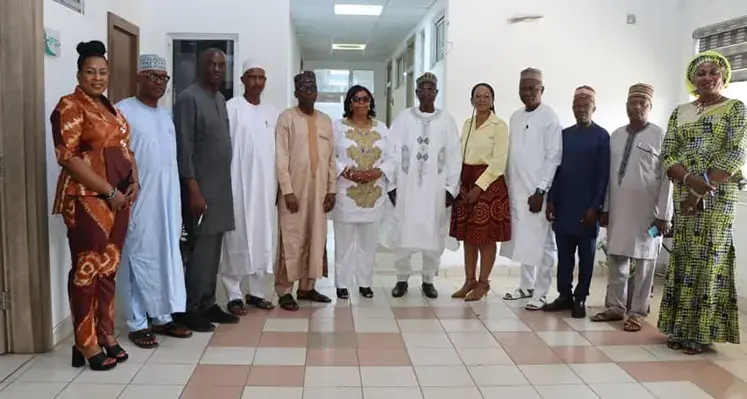
Nigeria and Botswana collaborates to modernise livestock sector. (Image credit: Federal Ministry of Livestock Development)