




The Federal Ministry of Livestock Development is scaling up strategic efforts to reposition Nigeria’s livestock sector by placing women and youths at the centre of sustainability, innovation and value-chain competitiveness.
This policy direction was underscored at the Capacity Building Workshop for Women and Youths in the Livestock Value Chain, held in Abuja from Monday, December 29 to Tuesday, December 30, 2025.
Addressing participants at the workshop, the Director, Technical, Office of the Permanent Secretary, Peter Alike, emphasised that the transformation of Nigeria’s livestock industry depends on the deliberate integration of sustainable and innovative practices across production, processing and marketing. He noted that adopting this approach is vital for unlocking the sector’s economic potential, strengthening food security and driving inclusive economic growth.
Peter explained that equipping women and youths with relevant skills and technical knowledge remains a core priority of the Ministry, given their growing influence in agribusiness development and rural livelihoods. According to him, the capacity-building initiative is designed as a continuous, hands-on programme focused on practical solutions that participants can immediately deploy within their farms and livestock enterprises.
He added that the training strongly promotes mindset change, actionable expertise and long-term competence development, with an emphasis on environmentally responsible and economically viable livestock systems. Peter further stated that the strategic importance of women and youths informed their recognition as a priority group under the ten pillars of the National Livestock Growth Acceleration Strategy (NL-GAS), the Ministry’s flagship framework for comprehensive sector reform.
Speaking on sustainable livestock production, animal scientist Ifeanyi Harry Njoagwuani described sustainability as a science-based and management-driven process. He highlighted climate-resilient breeds, improved genetics, precision nutrition through optimised feed formulations and climate-smart housing systems as essential tools for building resilient livestock systems.
In another session, Ayoade Akande stressed the importance of biogas production in sustainable livestock development. He called for strengthened extension services, increased private sector investment in modern feed technologies, expanded forage seed distribution networks and supportive policy frameworks to enhance sustainable ruminant nutrition.
In his closing remarks, the Director of Livestock Extension and Business Development, Joseph Ako Eleojo, urged participants to form cooperative alliances and act as change agents within their communities, noting that women and youths were deliberately targeted for their capacity to drive innovation, productivity and sustainability.
A major highlight of the two-day workshop was a study visit to De-Dre Solution Poultry Farm in Pasali 2, Kuje Area Council, Federal Capital Territory. With a capacity of 24,800 birds and daily output of about 650 crates of eggs, the facility offered participants valuable insights into efficient and sustainable poultry production. Participants were drawn from poultry and ruminant enterprises across several states of the federation.
Nigeria boosts livestock sector growth by empowering women and youths
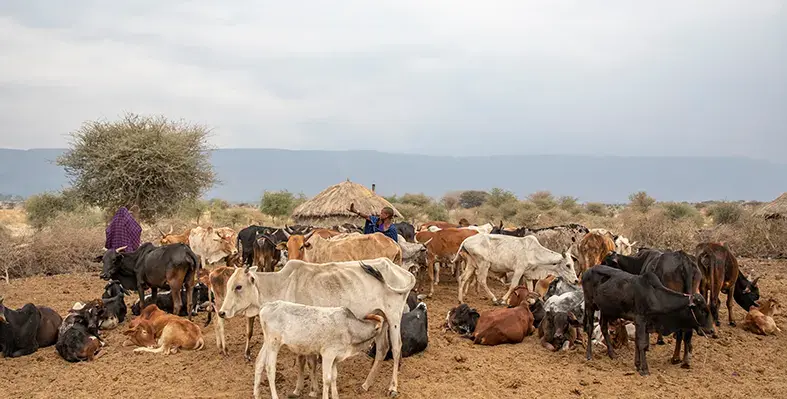
Livestock Ministry supports women and youth in development agenda.