





UK pig producers are being strongly advised to review their biosecurity strategies and disease contingency plans following new outbreaks of African Swine Fever (ASF) in Spain.
While the immediate threat level to the UK has not changed, industry experts warn that the evolving ASF situation across Europe is a clear reminder of the need for constant preparedness.
Julian Sparrey, group technical director at Livetec Systems, said, “The cases in Spain are part of the ongoing ASF situation across Europe. They highlight the potential impact an outbreak could have here, and why producers must stay one step ahead of ASF and other disease threats.”
ASF is one of the most serious diseases affecting pigs globally, with severe economic consequences for producers. If the virus were detected in the UK, pig farms within designated restriction zones could face at least 40 days with no pig movements. Sparrey emphasises that producers must fully understand how such restrictions would affect pig flow, housing capacity, staffing levels and overall farm operations. He added, “Pressure-testing contingency plans now is critical to business resilience and to regaining disease freedom as quickly as possible.”
According to Sparrey, the most likely pathway for ASF to reach the UK remains contaminated, illegally imported or undeclared meat. As a result, producers are encouraged to reassess all possible on-farm transmission routes, including vehicle access, staff hygiene, visitor protocols, pig-to-pig contact and overall site layout.
“Effective biosecurity doesn’t always require major investment,” he explains. “Small, practical improvements can make a significant difference if they’re consistently applied.”
Wild boar populations and neighbouring pigs also pose a potential risk, particularly through nose-to-nose contact that can be difficult to monitor. “While ASF poses no risk to human health, it is highly contagious among pigs,” said Sparrey. “Measures such as double fencing to prevent incursions may be justified in higher-risk areas.”
Rare breed pig keepers are likewise urged to register their animals and maintain appropriate quarantine facilities, which could help reduce the likelihood of compulsory culling if circumstances permit.
Throughout the year, AHDB has worked alongside Livetec Systems and the National Pig Association (NPA) to deliver vet-led ASF preparedness workshops. Sparrey recommends external biosecurity audits to identify weak points. “It can be difficult to spot vulnerabilities on your own farm,” he says. “Regular biosecurity reviews allow producers to make steady improvements. We have time now and we should use it.”
ASF threat: UK pig producers told to plan ahead
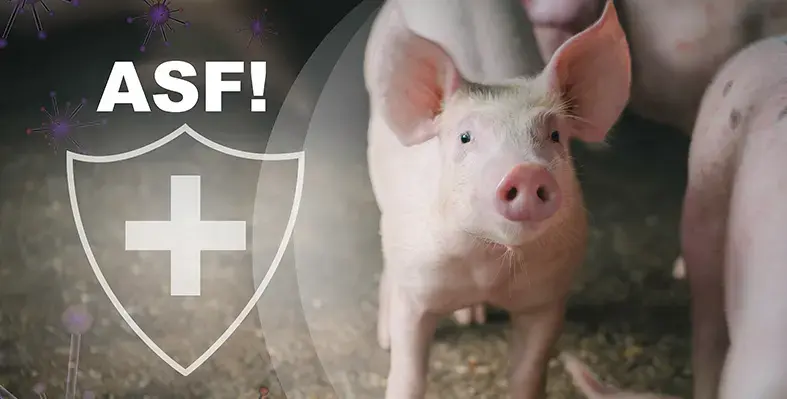
ASF is one of the most serious diseases affecting pigs globally, with severe economic consequences for producers.