




The Federal Government has reinforced its commitment to ranching as the cornerstone of Nigeria’s long-term livestock development strategy, signalling a major shift towards sustainable agriculture, food security and economic diversification.
This position was restated during an inspection visit by the Minister of Livestock Development, Idi Mukhtar Maiha, to Manchong Integrated Farms Limited in Nasarawa State.
Leading senior ministry officials and key industry stakeholders, the Minister described the farm as a compelling demonstration that modern ranching is not only possible in Nigeria, but also scalable, climate-resilient and environmentally sustainable. According to him, the facility challenges long-standing assumptions that ecological and climatic conditions limit the success of ranching systems in the country.
Maiha explained that the farm operates a fully integrated livestock model, combining structured animal management with year-round feed and fodder production, effective water management and genetic improvement programmes. He observed that the farm maintained lush green pastures even during the dry season, underscoring the potential of climate-smart agriculture to transform Nigeria’s livestock value chain.
The facility reportedly cultivates improved grass varieties such as Mombasa, Napier and Brachiaria, manages over 300 cattle across both beef and dairy breeds, and produces surplus animal feed annually. These achievements, the Minister noted, align with the Federal Ministry of Livestock Development’s reform agenda aimed at boosting productivity, reducing import dependence and strengthening rural livelihoods.
Building on these outcomes, Maiha disclosed plans for the ministry to collaborate with Manchong Integrated Farms on fodder seed production and genetic improvement initiatives. He added that the farm’s existing supply of fodder to states including Jigawa and Yobe positions it as a strategic hub for scaling a national feed system. Such a system, he said, would support small-scale livestock producers, stabilise supply chains and enhance overall sector efficiency.
The Minister further revealed that the facility would serve as a pilot centre for planned breeding programmes under the ministry’s reform framework. New genetic materials, he noted, would be developed and multiplied at the farm before being distributed nationwide.
Earlier, the owner of Manchong Integrated Farms, Hon. Yakubu Dogara, said the project was designed to demonstrate ranching as a practical solution to farmer–herder conflicts, particularly in northern Nigeria. He stressed that replicating the model could reduce insecurity, promote peaceful coexistence and unlock significant economic opportunities across the region.
Dogara highlighted the sector’s vast economic potential, noting that the global dairy and beef market is valued at about 2.5 trillion dollars, while northern Nigeria accounts for over 70 per cent of the country’s livestock population. He said capturing even a fraction of the global market could generate substantial revenue for Nigeria.
Also speaking, a livestock business partner to the Botswana Embassy in Abuja, Mr Clinton Agbo, described the farm as a strong platform for international collaboration, adding that discussions were ongoing to establish a pilot programme with a Pan-African outlook led by Nigerian stakeholders.
Ranching revolution: Nigeria's path to livestock reform
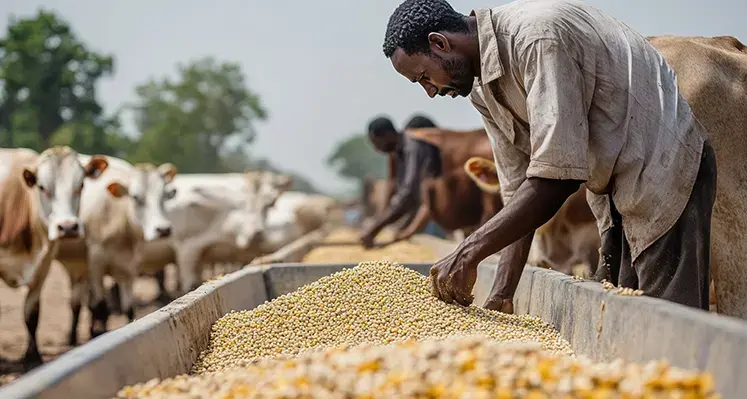
Ranching Shaping Nigeria's Livestock Future.