Farmers and other agricultural water users in South Africa’s Western Cape will have their water allocations reduced by 15% under new government restrictions, introduced amid falling dam levels and the threat of a strong to extreme El Niño event
Domestic and industrial users will receive 7% less water under measures announced by Water and Sanitation Minister Pemmy Majodina on 16 November.
The reductions are intended to conserve supplies before conditions worsen. For farmers, they mean making production decisions with less irrigation water, potentially affecting crop choices, watering schedules and the area that can be cultivated.
Lower dam storage prompts water restrictions
The Department of Water and Sanitation’s 2026/27 operating analysis for the Western Cape Water Supply System recommended early intervention after two consecutive below-average rainfall seasons. The restrictions are expected to save about 56.8 million cubic metres of water annually. Irrigation users will account for 29.6 million cubic metres, while domestic and industrial restrictions should save a further 27.2 million cubic metres.
The interconnected system supplies Cape Town, the West Coast, several towns and agricultural users through six dams, with a combined storage capacity of approximately 898.2 million cubic metres. On 2 November 2026, the dams held 646.5 million cubic metres, or 72.5% of capacity. At the same point in 2025, storage stood at 694 million cubic metres, equivalent to 84.4%.
Rainfall has also remained below average. The Western Cape recorded 722.7 mm in 2024/25 and 752.8 mm in 2025/26, compared with a long-term average of 964 mm. Although current storage is above levels recorded during the severe 2016/17 drought, the latest figures indicate increasing pressure on supplies.
What the cuts mean for Western Cape farmers
The Western Cape is a major producer of fruit, wine grapes and other horticultural crops, many of which depend on reliable irrigation. Reduced allocations could require growers to reassess seasonal water use and decide which crops or fields receive priority. The consequences will vary according to crop type, growth stage, farm location and access to alternative supplies.
Farmers can review irrigation plans by:
Prioritising growth stages when moisture stress can cause significant yield or quality losses.
Monitoring soil moisture and weather conditions before scheduling irrigation.
Checking pipes, pumps and equipment for leaks or inefficient water delivery.
Assessing whether drip irrigation or other water-efficient systems suit their crops and operations.
These adjustments may require investment, which can be difficult for smaller producers with limited access to capital. Solar-powered irrigation can reduce reliance on grid electricity or fuel for pumping, while efficient irrigation methods can help farmers make better use of available water. Combining these approaches may also help control energy costs, although solar power does not increase water availability.
El Niño raises the risk of further restrictions
The Department of Water and Sanitation has warned that strong to extreme El Niño conditions could bring higher temperatures, greater evaporation and reduced runoff into dams. These factors could put further pressure on reserves if rainfall remains low.
The department’s modelling indicates that, without demand reductions, the risk of shortages and mandatory restrictions could rise substantially from 2027. The current cuts are precautionary measures intended to reduce consumption before the system faces a more severe shortfall.
Majodina has called on farmers, businesses, municipalities and households to conserve water and manage demand. The Department of Water and Sanitation will continue monitoring dam storage, rainfall and consumption during the 2026/27 water year.
For farmers, the immediate task is to adapt irrigation plans to lower allocations while protecting crop yields and quality. The effectiveness of those measures will matter during the current season and if dry conditions persist.
Western Cape irrigation water allocations cut by 15%
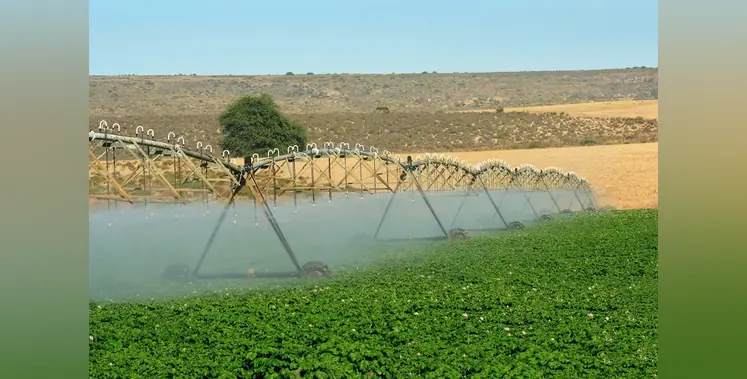
Domestic and industrial agricultural water users will receive 7% less water under measures announced by Water and Sanitation Minister Pemmy Majodina on 16 November.