





Ethiopia has renewed its call for greater recognition of coffee as more than a global export, framing it as a cultural treasure, a social bond and a vital economic pillar for both the country and the wider African continent.
The message was delivered at a high level policy forum held on Tuesday during the 3rd African Coffee Week in Addis Ababa, where leaders and development partners gathered to discuss the future of Africa’s coffee industry.
Meles Mekonnen, State Minister of Agriculture said, “Coffee is far more than a tradable commodity. It is and will remain one of Africa’s most powerful symbols and strategic assets,” Meles said.
He warned that climate change is placing increasing pressure on the sector, with erratic rainfall, rising temperatures and growing pest threats already affecting production. According to Meles, smallholder farmers are bearing the brunt of these changes, making climate resilience and sustainable transformation urgent priorities.
As Africa’s largest coffee producer, Ethiopia has positioned coffee at the core of its national development strategy. Meles said the government is expanding climate smart farming practices, strengthening quality control systems and improving market transparency, while ensuring women and young people benefit from sector reforms.
He also urged African countries to rethink their role in the global coffee value chain by moving beyond raw bean exports and investing in value addition, branding and finished products. He pointed to the African Continental Free Trade Area as a major opportunity to build regional value chains and create decent jobs.
“Investments in climate smart production systems and sustainable land management are not optional; they are economically prudent,” he said. “Together, we can cultivate a coffee industry that is economically vibrant and deeply rooted in Africa’s rich heritage.”
AU Commission Chief of Staff Mohamed El Amine Souef echoed the call for stronger cooperation, noting that new harmonised African coffee standards aim to boost competitiveness.
“Coffee brings people from diverse cultures together for mutual benefit,” Souef said.UNIDO Representative Stephen Kargbo highlighted coffee’s role in Ethiopia’s export earnings while warning of climate risks and price volatility. “No single institution or government can address these issues alone,” he said.
Italian Ambassador Sem Fabrizi praised coffee’s cultural roots and confirmed Italy’s continued support through development cooperation and increased financing via the Italian Climate Fund.
Ethiopia puts coffee at heart of culture climate and growth
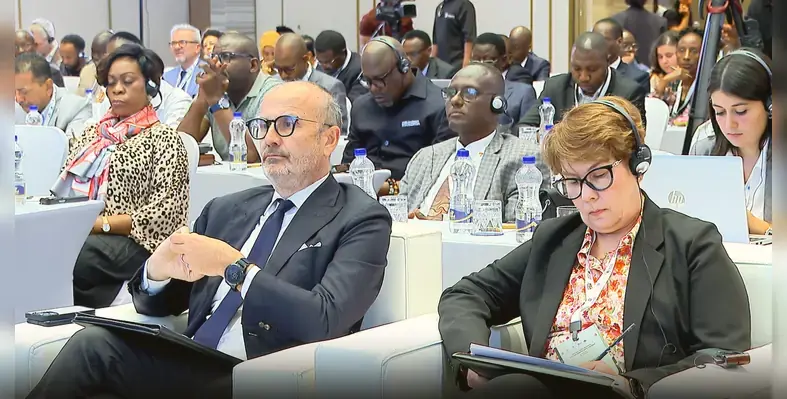
Ethiopia puts coffee at heart of culture climate and growth. (Image credit: Ethiopian News Agency)