





Tanzania has taken a significant step towards strengthening its agricultural sector with the launch of a new large scale rice mill in Kahama district.
The facility, developed by local company KOM Food Products Ltd, represents an investment of more than 100 billion Tanzanian shillings, equivalent to around US$39.56million. Construction of the plant was completed on a 54 hectare site and operations officially began in late January, according to the Tanzania Investment and Export Zones Authority.
The project is being described as one of the most important agro industrial developments in the country. While details of its processing capacity have not been made public, the mill is expected to play a central role in supporting local rice farmers. Most of the paddy processed at the facility will be sourced from producers in the Shinyanga region, helping to create a more reliable market for smallholder farmers.
“Beyond industrial output, the project is expected to strengthen agricultural value chains in Shinyanga Region by providing a stable market for paddy rice produced by smallholder farmers,” the press statement said. “The investment supports Tanzania’s broader strategy to expand domestic agro processing, enhance food security, and retain more value within the country by shifting more of the rice value chain — from farming to milling and packaging — into local production.”
Tanzania has been self sufficient in rice for several years, producing more than it consumes and supplying neighbouring countries with surplus grain. Data from the Ministry of Agriculture show that rice production averaged 2.43 million tonnes per year between the 2019 2020 and 2023 2024 seasons, while domestic demand stood at about 1.2 million tonnes annually. The new mill is expected to increase local processing capacity and make it easier to channel surplus rice into export markets.
According to TISEZA, KOM Food Products plans to expand production gradually in response to growing demand. “KOM Food Products said it plans to scale up production in phases to meet rising domestic demand and explore regional market opportunities in East and Southern Africa,” the authority highlighted.
Rice exports from Tanzania have fluctuated in recent years. Between 2020 and 2024, the country exported an average of nearly 387,066 tonnes of milled rice each year, with exports peaking at 622,422 tonnes in 2022. Export revenues during this period averaged close to $191 million annually, with key markets including Uganda, Kenya, Rwanda and the Democratic Republic of Congo.
With East African Community countries importing large volumes of cereals each year, the Kahama rice mill could help Tanzania strengthen its position as a regional supplier while supporting farmers, creating jobs and adding more value within the country.
Tanzania boosts rice processing with new mill
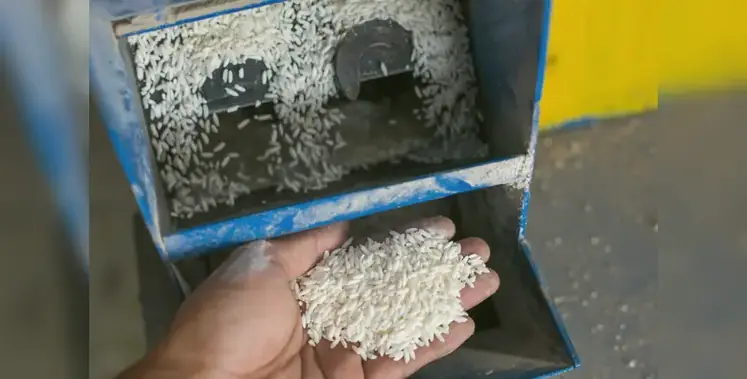
Tanzania boosts rice processing with new mill.