African farmers face mounting pressure from declining soil fertility, rising input costs and more challenging growing conditions
Improving soil health while managing input costs is an important part of building more resilient farming systems. Enhanced rock weathering is attracting attention as a potential option, involving the application of crushed rock to agricultural land to improve soil conditions and potentially remove carbon dioxide from the atmosphere.
MATI and the International Institute of Tropical Agriculture (IITA) have signed a five-year agreement to study the potential of crushed basalt in African farming systems. Signed at COP31 in Antalya, Türkiye, on 11 November, the partnership will support field trials in Kenya and Nigeria to assess its effects on soil health, crop performance and fertiliser use.
How crushed basalt could benefit agricultural soils
Basalt contains minerals that can be released into the soil as the rock gradually weathers. Applying crushed basalt to farmland could help address soil acidity and supply nutrients, potentially improving conditions for crop growth. The weathering process can also remove carbon dioxide from the atmosphere through natural chemical reactions.
However, the agricultural value of the approach will depend on how it performs across different soil types, crops and growing conditions. The IITA trials will assess changes in soil health and crop productivity, including how rock dust performs alongside reduced applications of synthetic fertiliser.
The research will help establish which soil types and farming systems are best suited to the approach, alongside the application rates needed to achieve measurable results. The findings could provide a basis for recommendations tailored to local agricultural conditions.
Research findings could inform farmer advisory services
The partnership will connect the trials with two CGIAR Science Programs. The Sustainable Farming Program, which works with national partners in more than 20 countries, will help link the findings with agricultural advisory services and soil health solutions for smallholder farmers.
The Climate Action Program will connect the research with efforts to help farming systems adapt to heat and drought, reduce emissions and inform climate-related policy and financing decisions.
John Choptiany, IITA's Resilience and Climate Adaptation Program Lead, said the trials would help determine whether rock dust could enable farmers to get more value from fertiliser and maintain harvests under difficult weather conditions.
The agreement also includes capacity building with national research institutions, data sharing, scientific publications and joint fundraising. Involving local research partners will be important in assessing how the results apply to different farming systems.
Indian results provide a starting point, not an African benchmark
MATI reports that it is working with over 35,000 farmers and has facilitated the application of over 350,000 tonnes of rock dust across seven countries.
In a 2025 comparison involving 235 farmer fields across four Indian states, MATI reported a median grain yield increase of 25% in rice fields treated with rock dust compared with untreated plots. The result offers a basis for further investigation, but it does not establish the likely performance of the material in Africa. Soil composition, crop varieties, climate and application methods can all influence outcomes.
MATI began work in Zambia in 2023. The partnership with IITA is intended to build on its regional experience through structured trials under African agricultural conditions.
Field evidence will determine the way forward
For enhanced rock weathering to become a practical option for African farmers, researchers will need to establish whether its benefits are consistent and economically viable. The availability and cost of crushed basalt, transport requirements and application methods will also influence its adoption.
MATI won the $50 million XPRIZE Carbon Removal Grand Prize in 2025, recognising its work in carbon removal. Its collaboration with IITA will now investigate whether the approach can deliver measurable agricultural benefits under African conditions.
The findings could help determine where crushed basalt is suitable for agricultural use, how it should be applied and whether its benefits justify the cost of adoption. Locally validated evidence will be essential before rock dust can be considered a practical addition to existing soil-management strategies.
MATI and IITA to test rock dust’s impact on African farms
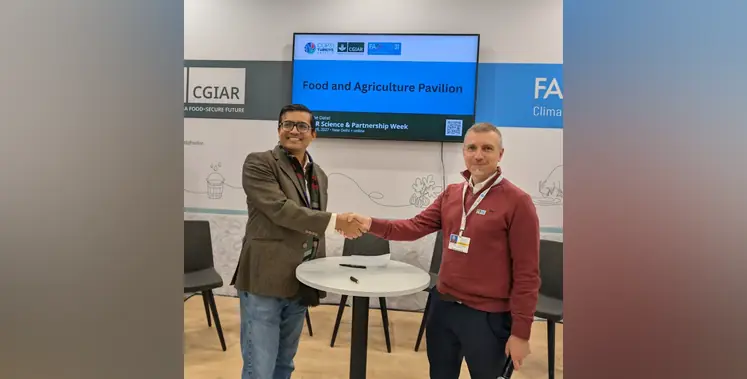
MATI and the International Institute of Tropical Agriculture (IITA) have signed a five-year agreement to study the potential of crushed basalt in African farming systems. (Image source: CGIAR)