West African countries are looking to strengthen domestic rice production and reduce their dependence on imports
Improving output will require more than expanding cultivation. Farmers need better access to quality seeds, irrigation and mechanisation, while businesses require adequate processing and storage facilities to make locally produced rice more competitive.
Addressing these requirements, the Economic Community of West African States (ECOWAS), in partnership with the African Development Bank Group (AfDB), has officially launched the Project for the Development of Resilient Value Chains for Rice in West Africa (REWARD). The programme aims to strengthen regional rice production and achieve self-sufficiency by 2035.
The launch took place on 11 November 2026 at the ECOWAS Commission headquarters in Abuja, Nigeria. It forms part of the ECOWAS Regional Rice Roadmap for 2025–2035 and the organisation's wider agricultural transformation agenda under ECOWAS Vision 2050.
Strengthening rice production and regional supply chains
Rice is an important staple across West Africa, but domestic production systems continue to face constraints that affect productivity and market competitiveness. Limited access to improved seeds, climate variability, inadequate farm mechanisation and post-harvest losses remain significant concerns for producers. Insufficient private-sector investment also restricts the development of stronger commercial rice value chains.
These challenges highlight the need to connect agricultural production with processing, storage, distribution and market access. African Farming previously examined the wider investment requirements in Africa's race for rice self-sufficiency, including the infrastructure and financing needed to strengthen the continent's rice industry.
REWARD seeks to address these constraints through coordinated investment and interventions across the regional supply chain.
REWARD outlines three areas of intervention
The programme has an estimated financing envelope of 500 million Units of Account. The ECOWAS-led component has received a US$12 million grant from the AfDB, alongside an in-kind contribution valued at US$1.2 million from the Commission.
The broader REWARD investment platform aims to mobilise US$850 million across 14 countries and benefit more than one million farmers, particularly women and young people.
Its implementation strategy focuses on three areas:
Climate resilience and technological innovation: Improving irrigation infrastructure, promoting sustainable agricultural practices and expanding access to high-yielding rice varieties.
Employment and economic empowerment: Investing in processing, storage, skills development and entrepreneurship to create opportunities for women and young people.
Regional market integration: Supporting more harmonised agricultural policies, improving cross-border trade and addressing non-tariff barriers, while leveraging opportunities under the African Continental Free Trade Area.
Together, these priorities are intended to improve production capacity while strengthening the commercial activities that connect farmers with regional markets.
Processing and trade are central to the 2035 target
Increasing rice output will not automatically translate into greater regional self-sufficiency. Farmers also need reliable markets for their harvests, while processors require consistent supplies of quality paddy and suitable facilities to handle larger volumes.
Investment in milling, storage and distribution can help reduce post-harvest losses, improve product quality and retain more value within producing countries. Stronger cross-border trade arrangements could also give local producers and processors access to a wider customer base.
The programme's emphasis on regional market integration is therefore particularly relevant. Reducing trade barriers and improving coordination between Member States could help create more efficient supply chains and make locally produced rice more competitive across the sub-region.
Regional oversight to support implementation
A Regional Steering Committee was inaugurated during the launch to provide strategic oversight, strengthen institutional coordination and monitor implementation. ECOWAS has also called on Member States and their National Coordination Units to support timely execution, transparency and accountability.
The programme builds on commitments made at the January 2023 Dakar 2 Summit on Food Sovereignty and Resilience, as well as the outcomes of the Accra Rice Conference and Investment Roundtable.
Achieving rice self-sufficiency by 2035 will depend on how effectively participating countries translate these commitments into practical improvements. Greater access to agricultural inputs, resilient production systems, processing infrastructure and integrated markets will all influence the outcome. Ultimately, REWARD's progress will be reflected in whether farmers can increase output and regional businesses can supply more competitive, locally produced rice to West African consumers.
West Africa targets rice self-sufficiency through REWARD programme
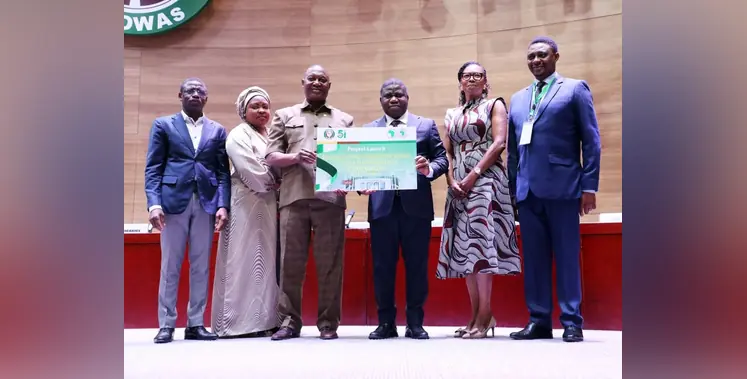
The Economic Community of West African States (ECOWAS), in partnership with the African Development Bank Group (AfDB), has officially launched the Project for the Development of Resilient Value Chains for Rice in West Africa (REWARD).