




Mozambique and the United Arab Emirates have signalled a renewed commitment to strengthen cooperation in agriculture, food security and environmental protection, as both countries seek closer strategic partnerships.
The announcement was made by Mozambique’s Minister of Agriculture, Environment and Fisheries, Roberto Mito Albino, during meetings held in Dubai on the margins of the World Governments Summit. The discussions took place alongside a session on the future of energy and industries, where Mozambique is participating as part of its broader international engagement.
According to Minister Albino, cooperation between the two countries is being reshaped to reflect growing bilateral relations and shared priorities. He said talks with the UAE Minister of Climate Change and Environment, Amna Al Dahak, resulted in an agreement to establish a joint technical team tasked with putting into action commitments outlined in an existing Memorandum of Understanding on environment and biodiversity.
The team will focus on translating policy agreements into concrete programmes that support sustainable agriculture, environmental conservation and inclusive economic growth.
Minister Albino stressed the importance of ensuring that small scale farmers benefit from agricultural development. “Small-scale producers should be integrated to increase their income and contribute to the overall growth of the country. We also reject the idea that the industrialization of agriculture represents a threat to the environment. Today, to increase overall production, we focus on expanding areas, which leads to deforestation, because yields per hectare are low. Industrialization allows for greater production in a smaller area and with less environmental impact”, he said.
He pointed to the Mapai dam project in Gaza province as a clear example of how modern infrastructure can support both productivity and environmental protection. The dam is expected to support intensive agricultural activity within a limited area, reducing pressure on forests and fragile ecosystems.
“With 200,000 hectares of irrigable land, we can obtain the yield that is currently achieved on about one million hectares with low productivity levels. The dam will also allow for flood control, energy production, and environmental protection in the Limpopo basin”, he said.
On innovation, Minister Albino highlighted the need to embrace modern technologies that support sustainable farming. He said agricultural industrialisation can be achieved without harming the environment by applying conservation practices, responsible use of inputs and cleaner energy solutions.
“It is possible to industrialize agriculture in an environmentally friendly way. It must include conservation practices, rational use of inputs, and technologies that eliminate the need for fossil fuels harmful to the environment.”
He also underlined the importance of digital transformation, adding: “Mozambique cannot remain on the sidelines of global trends linked to new technologies and artificial intelligence. The world is becoming digital and Mozambique must be digital.”
The renewed partnership with the UAE is expected to support Mozambique’s efforts to modernise its agricultural sector while protecting natural resources and improving food security.
Mozambique and UAE strengthen agricultural ties
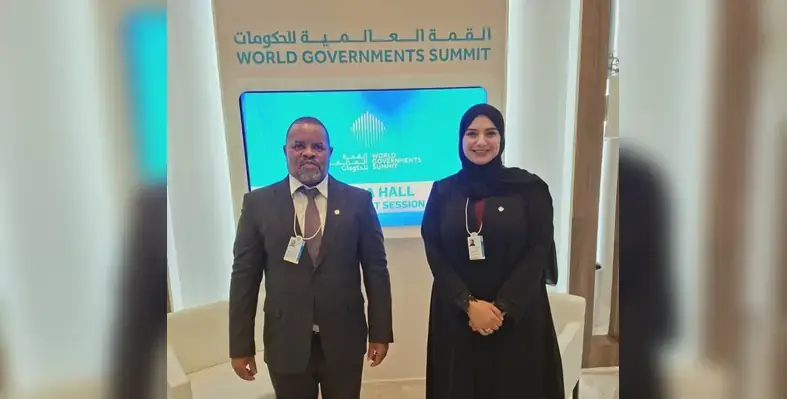
Mozambique and UAE move to strengthen ties in agriculture and food security. (Image credit: AIM)