vc.web.local

EIMA 2026 aims to bridge demand-supply gap in agritech.

ICE will bring together as many as 830 business operators at a special programme of business-to-business meetings during the 47th edition of EIMA International that is set to convene at the Bologna Exhibition Centre from 10 to 14 November

With visitors already confirmed from 150 countries, the programme further scaled the event's international standing. “EIMA is in tune with new marketing requirements and allows for the ‘tailor-made’ planning of business meetings,” said Simona Rapastella, the director-general of FederUnacoma, the Confindustria federation representing the agricultural machinery sector and organiser of EIMA International. 

Manufacturing activities are becoming concentrated only to the most receptive regions, leading to a fragmented market. “To facilitate the ‘matching’ of supply and demand for technologies, the exhibition is expanding its international scope," Rapastella said, “and is rolling out specific initiatives for foreign businesses by strengthening the system of business-oriented services”.

There will be 650 foreign exhibiting companies at EIMA 2026 – out of a total of 1,800 already confirmed – representing 45 countries. The number of foreign visitors is expected to rise compared with the previous edition (2024), which recorded more than 63,000 attendances.

"EIMA is in tune with the new demands of marketing and promotes a ‘tailor-made’ approach to business management,” added Simona Rapastella, “but it also takes account of the macro-economic context, to focus on the variables that may influence the agricultural machinery sector; and the political context, which is crucial both for the development of sectoral strategies in different parts of the world and for identifying financial instruments that can support investment in the coming years.”

This year's theme, 'Drought in African agriculture: Economic and social costs', will take note of the current climatic and environmental emergencies facing the African continent and to analyse the repercussions these may have on the economies and social systems of many countries. 
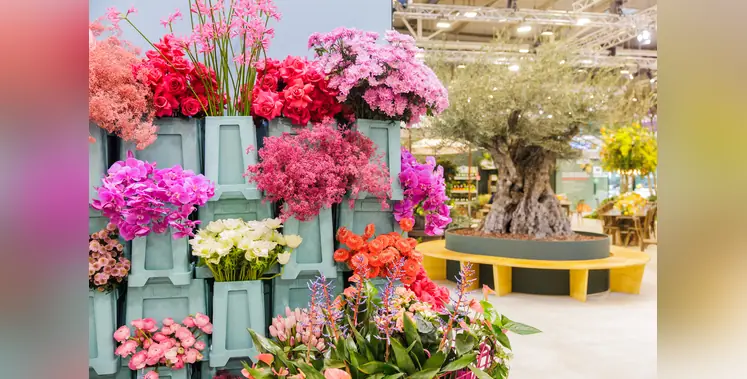
IPM ESSEN unites global supply and demand in one place. (Image source: IPM ESSEN)

Global trade fair for horticulture, IPM ESSEN will be opening its doors to international partners for expansion accross new markets with wider networking and long-term business opportunities 

Set to be held in Germany from 26 to 29 January 2027, IPM ESSEN will be introducing a new international delegation programme, which will see partcipation from both key and emerging markets. There will be an engaging presentation of products, concepts and innovations in the green sector. The delegation will comprise not only international trade associations and industry organisations but political institutions and economic development agencies as well. 

“IPM ESSEN unites global supply and demand in one place. With the new delegation programme, we are systematically expanding this matchmaking function and creating additional opportunities to connect international IPM participants with one another. This is how personal encounters lead to new projects and long-term partnerships,” said Oliver P Kuhrt, CEO of Messe Essen. 

Participants can take away valuable practical insights from exchanges with horticultural businesses, breeders, nurseries and garden centres in North Rhine-Westphalia.

IPM ESSEN will have a dedicated Innovation Centre Horticulture Technology promoting future-oriented fields such as climate adaptation, resource efficiency, peat reduction, automation and artificial intelligence.

The IPM Discovery Centre will display innovative POS concepts and ensure modern shopfitting ideas for retailers are staged to maximum effect. Exhibitors from all areas of horticulture can tap into easy brand positioning by integrating their products and novelties into high-profile sales concepts. The presentation is practical, trend-oriented and emotive, directly within the application context. 

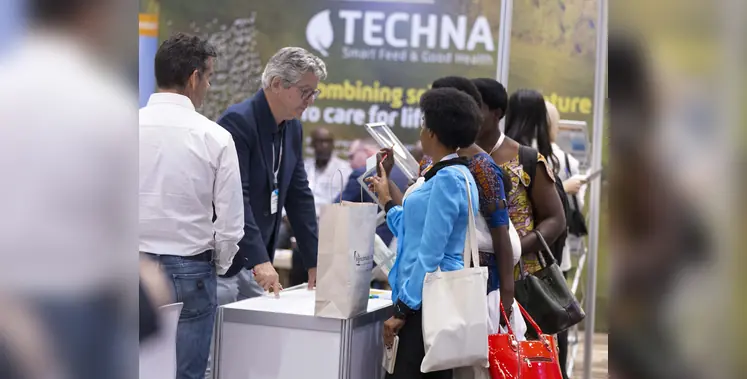
The Kigali Convention Centre will host VIV Africa 2026. (Image source: VNU Exhibition)

Rwanda's capital is about to become the epicentre of East Africa's agrifood conversation

From 7 to 8 October, the Kigali Convention Centre will host VIV Africa 2026, preceded by a Leadership Conference on 6 October that sets the tone for two days of dealmaking across the feed to food value chain.

What makes this edition worth watching isn't just the scale, it's who's in the room. Around 150 exhibitors are expected on the floor, spanning five sectors that mirror the industry's full journey: Animal Health, Feed Ingredients & Additives, Processing, Farm Production, and Feed & Grain Technology, plus a growing Dairy Pavilion rounding things out. Each sector reflects where the region's investment is flowing, from biosecurity to milling technology built for scale.

Names like Ceva/Laprovet, Aviagen, Big Dutchman, Cargill, De Heus and Bühler sit alongside a deep bench of regional specialists, companies like Soproda Poultry Feed, MG2Mix Premix Nutrition and Hy-Line/Kenchic/Hybrid, a mix that speaks to VIV Africa's real value proposition: global technology meeting local expertise, in the same hall, at the same time. That pairing matters in a market where imported equipment often needs adapting to local climates and infrastructure, and the specialists best placed to do that are usually based down the road rather than overseas.

That's echoed in the visitor mix too. Farm owners, feed millers, veterinarians, processors, distributors and investors are expected to walk the floor, many steered toward exhibitors through two structured programs: the Investment & Market Access Forum, pairing investors and policymakers with regional businesses, and the Hosted Buyer Program, scheduling direct introductions between senior purchasers and exhibitors. It's a format built for efficiency, less wandering, more matchmaking.

Rwanda's own agriculture sector is woven into the show rather than sitting on its sidelines. The Rwanda Poultry Industry Association and the Ministry of Agriculture and Animal Resources have both been closely involved in shaping the event, and local exhibitors and delegates will be present throughout, a signal that VIV Africa is as much about strengthening the host country's own industry as it is about drawing in the international crowd.

For those wanting more than the trade floor, the Technical Best Practice Seminar program runs alongside the exhibition, covering topics from feed efficiency modelling to gut health in broiler production. The Leadership Conference, held the day before, tackles the bigger picture: market outlook, poultry sector transformation and animal health, giving investors and policymakers a forum to set the agenda before the floor opens for business.

Registration is open now at africa.viv.net and early sign-up comes with a practical perk: a free badge plus shorter onsite queues. Visitors also have access to the exhibitor list and program via the website, so visitors can map out their two days in Kigali before they land.

Biosecurity practices can boost overall performance even at a low cost for pig producers. (Image source: DLG)

Disease prevention and herd health management require continuous health monitoring and farm-tailored vaccination programmes

Sound management practices include maintaining barn hygiene, access controls, early detection and modern preventive measures. Such practical solutions for economic livestock production will be addressed at the DLG Expert Stage: Biosecurity and Feed Safety by EuroTier, which is set to return in Hanover, Germany, from 10 to 13 November. There will be specialist presentations and panel discussions covering current challenges and practical solutions, from modern hygiene concepts and feed quality assurance to innovative technologies for herd management and disease prevention. Experts from farming, science, industry and advisory services will present the latest developments and future-oriented production and housing concepts.

Animal health remains central to effective livestock production, driving the significance of biosecurity management. Prevention is better than cure when it comes to addressing epidemics like African swine fever (ASF), foot-and-mouth disease (FMD) and highly pathogenic avian influenza (HPAI) to name a few. The right hygiene protocols can break infection chains and restore economic losses.

Optimised barn climate and customised feeding strategies can help boost overall performance even at a low cost for pig producers. Strict adherence to biosecurity measures, including herd depopulation and restricting movements, has made a huge difference in curbing the African swine fever. 

Biosecurity practices have also helped check the spread of foot-and-mouth disease. Preventive measures such as maintaining consistency in barn and personnel hygiene, or vehicle disinfection, among others can protect farms keeping cloven-hoofed animals.

Biosecurity in the poultry sector can prevent seroious threats like avian influenza, with proper cleaning and disinfection practices. Alkaline cleaners can wipe out fat and protein residues, followed by disinfection with approved products and effectiveness testing through environmental swabs.

The separation of clean and dirty areas, changing footwear and clothing, regular handwashing and visitor logs are standard practice. External vehicles should avoid entering farm premises whenever possible. If vehicles must visit multiple farms, cleaning and disinfection are essential. Preventing contact between wild birds and feed, water or outdoor areas is also crucial, while rodent and insect control remain important components of disease prevention.

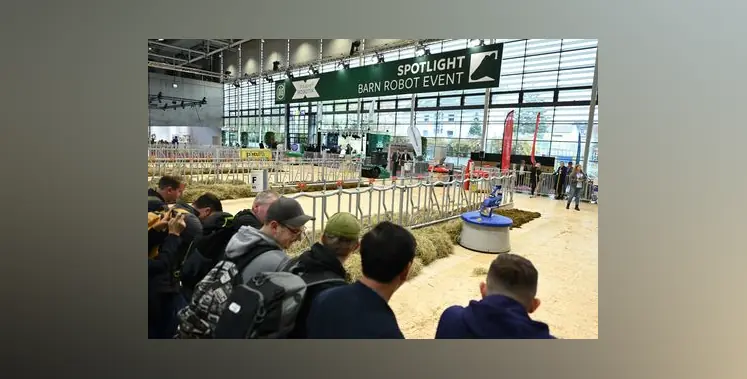
Visitors can check out the latest developments in robotics. (Image source: EuroTier)

Prominent livestock platform, DLG Spotlights at EuroTier 2026 in Hanover, Germany, will shed light on innovations and future-focused developments across the livestock sector

From 10 to 13 November, visitors can check out the latest developments in robotics, emission reduction and forage production. Selected breeding animals will be exhibited live for the 'TopTierTreff' (Top Genetics). Such live demonstrations and curated special exhibitions will unlock futuristic ideas for innovative technologies, processes and concepts designed to make livestock farming more efficient, sustainable and animal-friendly.

A robust technical programme will include lectures, panel discussions and networking formats covering all key areas of livestock production and related energy sectors.

Manufacturers of advanced milking technology will showcase automation in modern dairy farming with the latest robotic solutions for automated milking systems or share visionary barn construction blueprints at the Barn Robot Event. Conventional milking parlors are gradually becoming a thing of the past replaced by conversion concepts based on robotic systems. Milking large dairy herds are no more a labour-intensive job with the support of advanced technologies. While future-oriented, these concepts will be grounded in their easy facilitation in real life situations.

For Emission Reduction, visitors can expect live demonstrations of seamless integration of livestock farming and climate protection. With expert stages for pigs and poultry lying adjacent to the emission reduction pavilion, visitors can expect insights on sustainable practices especially in these two areas.

The Top Genetics display will unite breeders from home and abroad, with breeding companies talking about strategies, fostering knowledge-sharing, particularly in dairy and beef cattle breeding. The event organisers have arranged for a large panoramic video screen this year so that the animals exhibited on stand reach far and wide. 

Spotlight on 'Forage Production' will promote smart farming technologies that can revolutionise the quality of maize silage, grass silage and hay throughout the entire production chain, from harvesting to ensiling and storage. This offering will be complemented by the new “Forage Days”, taking place on 12 and 13 November. During these special theme days, the DLG Expert Stage Cattle, as part of the Forage Production Spotlight, will focus on the production of high-quality forage and its targeted use in ruminant nutrition.

The 'Innovation Boulevard' that will be a new addition this year, will feature products recognised with the Innovation Award, alongside other notable innovations in animal farming, feed, management and technology. Visitors will gain a concise overview of the latest developments and then have the opportunity to meet the product developers directly at their exhibition stands for more in-depth discussions. 

More Articles …