


cc.web.local

twitter linkedin acp contact

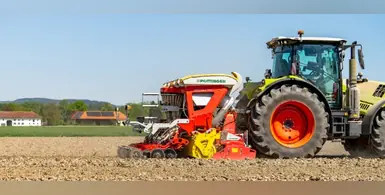
Case IH presenting models from the compact Quantum range right through to the powerful Optum.(Image credit: Case IH)

Case IH is set to make a strong impression at Agribex 2025 in Brussels, highlighting its commitment to Belgian farmers with a full display of innovative tractors, advanced precision technology, and next-generation equipment.

Taking place from 3–7 December, the exhibition will see Case IH presenting models from the compact Quantum range right through to the powerful Optum, ensuring every farming sector is represented. Visitors to Hall 6, Stand 6200, will also witness the Belgian debut of the refreshed 100–117hp Farmall C tractors.

The latest Farmall C line-up has been updated with customer-focused features, offering a choice between the familiar 24F/24R ActiveDrive 2 transmission or a new 12F/12R ManualDrive option, equipped with a clutchless electronic power shuttle. For specialist tasks, operators can add eight creep speeds, expanding the range to 20F/20R. Both transmissions now benefit from the ActiveClutch brake-to-clutch system, designed to improve ease of control, especially during intensive loader work. Supporting this, Case IH’s new factory-fitted L635 mechanical self-levelling front loaders provide an impressive 2.0t lift capacity and reach of 3.8m.

A major attraction will be the Puma 185, representing the newly introduced generation of Puma tractors. Featuring contemporary styling, improved front axle suspension and tighter turning capability, it brings enhancements across transmission performance, braking efficiency and rear implement connectivity. The stand will also showcase a Puma 220, equipped with dual narrow wheels, tyres and a central tyre inflation system supplied by Gruva designed specifically for the needs of root crop growers.

Case IH’s presence continues with the compact Farmlift 626 telescopic handler, capable of lifting 2.6t to 6.0m, and the RB456 Rotor Cutter baler, known for producing high-density variable-chamber bales up to 1.65m with either 13 or 25 knives. The brand will also engage visitors through special initiatives. “We’ll also have a special focus for Ladies’ Day on Thursday, December 4,” said Matthias Claerbout, Marketing Manager Benelux for Case IH.

“This initiative underscores our dedication to shaping a future where women in agriculture thrive – empowering them with technology, and opportunities to lead the industry forward. In addition, we are supporting the Workshop Live project from Thomas More school, providing Case IH machines for live workshop activities by students, underlining our belief in the next generation of engineers.”

FPT powers New DEUTZ-FAHR 8 Series TTV with N67 Engine. (Image credit: FTP)

FPT Industrial has strengthened its leadership in the global agricultural machinery market with a major new milestone: the supply of its renowned N67 engine for the newly launched DEUTZ-FAHR 8 Series TTV.

Revealed at Agritechnica 2025, this partnership between FPT - the Iveco Group’s powertrain specialist and SDF, one of Europe’s most respected agricultural machinery manufacturers, marks a significant advancement in next-generation farming technology.

DEUTZ-FAHR, a flagship brand under the SDF umbrella, is known worldwide for precision engineering, premium performance and cutting-edge agricultural solutions. Its latest 8 Series TTV tractor sets a new benchmark in the industry, delivering improved comfort, advanced digital intelligence and powerful, efficient operation tailored for today’s demanding farming environments.

At the core of this high-performance machine lies FPT’s N67 engine, selected for its market-leading power density, exceptional efficiency and proven reliability. Its compact architecture enhances manoeuvrability, while the engine’s seamless integration with the new tractor platform ensures outstanding responsiveness even under the toughest workloads. Compatibility with HVO (Hydrotreated Vegetable Oil) and an extended 1,000-hour oil change interval reflect FPT’s commitment to sustainability and reduced running costs both key priorities for modern agricultural operations.

In collaboration with SDF, FPT co-developed a structural oil pan and integrated engine management software to meet the precise requirements of the 8 Series TTV, ensuring superior durability and optimised performance. The N67’s six-cylinder configuration and extensive customisation options make it a versatile solution for a wide range of mid-range agricultural applications.
The engine is part of FPT’s acclaimed NEF Series, an industry benchmark for its EGR-free combustion, patented HI-eSCR2 after-treatment technology, and market-leading productivity. Since its debut in 2001, over two million NEF engines have powered tractors, construction machinery, marine vessels and power generation systems - a testament to the brand’s engineering excellence and long-term dependability.

As FPT marks over 100 years of powering agricultural innovation, this partnership further reinforces its status as a preferred global powertrain supplier. The agreement not only celebrates FPT’s heritage but also reflects its commitment to driving the future of sustainable, intelligent agriculture.

“We could not have celebrated Agritechnica in a better way. This new partnership with the DEUTZ-FAHR brand is a clear sign that we are recognized as a strong and reliable partner in the industry,” stated Sylvain Blaise, President of Iveco Group’s Powertrain Business Unit. “As a company, we have always worked with our customers’ needs in mind and with innovation at the core of everything we do… We are confident it will pave the way for future achievements together.”

“To achieve the performance standards we set for this new generation of tractors, we engaged in a strategic co-development partnership with FPT…” added Alessandro Maritano, SDF Chief Commercial Officer.

Senegal boosts plant protection with new drone technology.

Senegal is taking a major leap in modernising its agricultural pest-control systems.

The Direction de la Protection des Végétaux (DPV) has introduced six “new-generation” drones to strengthen surveillance and phytosanitary operations across the country. This initiative marks the first time drones are being deployed in Senegal’s plant-protection efforts and underscores the nation’s growing commitment to leveraging technology in agriculture.

According to a communication from the Ministry of Agriculture, the drones are capable of covering 25 hectares of farmland per hour, enabling the DPV which has overseen crop monitoring and phytosanitary control since 1974  to carry out its operations with far greater efficiency and precision.

Beyond increasing productivity, the drones are designed to make fieldwork safer for staff. The DPV emphasised that the technology will “reduce staff exposure to chemical treatments, improve response times, and elevate the overall quality of interventions.” This innovation not only accelerates pest control measures but also ensures that interventions are more targeted and environmentally responsible.

The successful integration of drones into Senegal’s agricultural system is credited to a strategic partnership with the country’s Air Force. Under the leadership of Colonel Ousmane Ngom, a dedicated team of remote pilots and technicians has been trained to operate these advanced machines, ensuring that the technology is used effectively and safely.

The introduction of drones is particularly timely given the ongoing pest challenges facing Senegalese agriculture. In its 2023 report, the DPV highlighted the spread of the Fall Armyworm, which was first detected in Senegal in 2018 and continues to migrate between departments, posing a significant threat to maize crops. According to the Food and Agriculture Organization (FAO), this pest alone accounts for losses of approximately 18 million tonnes of maize annually across Africa.

In addition to the Fall Armyworm, the DPV continues to monitor other damaging pests, including locusts, blister beetles, and fruit flies  the latter of which is especially destructive for mango production.

For Senegal, the adoption of drone technology represents a clear shift towards precision agriculture and modern farming practices. The country aims to enhance food security, improve agricultural resilience, and deliver faster, safer, and more effective pest control measures. As the DPV deploys these aerial tools for the first time, Senegal is positioning itself at the forefront of agricultural innovation in West Africa.

Zamfara, MOFI partner on mechanised farming.

Zamfara State has taken a major step towards reshaping its agricultural future, as Governor Dr Dauda Lawal formalised a strategic Memorandum of Understanding (MoU) with the Ministry of Finance Incorporated (MOFI).

The agreement aims to accelerate large-scale mechanised farming, agro-industrial development, and modern agricultural practices across the state.

The deal was sealed during the Africa Investment Forum (AIF) Market Days 2025, held from 26 to 28 November in Rabat, Morocco. The forum, widely recognised as a premier platform for advancing investment-ready projects across the continent, brought together African investors, financiers, and policymakers to fast-track funding partnerships. According to Governor Lawal’s spokesperson, Sulaiman Bala Idris, the gathering allowed governments and investors to negotiate directly and push major economic initiatives towards implementation.

Organised by the African Development Bank in collaboration with six founding institutions, the AIF Market Days served as a multidisciplinary space for unlocking capital, strengthening private-sector engagement, and enhancing collaboration on Africa’s development priorities. Governor Lawal participated in several high-level discussions centred around boosting private investment, expanding public-private partnerships, and raising domestic financing for long-term growth.

Speaking on the new agreement, the governor’s spokesperson noted its strategic importance, explaining that “The agreement positions Zamfara State as a key beneficiary of the Integranium Agricultural Transformation Initiative—a national programme focusing on mechanised farming, agro-processing, post-harvest systems, and global market access.” The arrangement provides a clear division of responsibilities: “Under the MoU, Zamfara will provide land, infrastructure, security, and a supportive policy environment, while MOFI takes the lead on financing, investor engagement, and project development support.”

This partnership is expected to unlock new employment opportunities, enhance food security, strengthen agricultural value chains, and support inclusive economic growth across Zamfara and the wider North-West region. The focus on mechanisation, modern processing, and market expansion places Zamfara in a strong position to attract global and local agribusiness investors.

During a roundtable session with international investors, Governor Lawal portrayed Zamfara as a rapidly developing agricultural destination. He highlighted major projects underway in the state, including an international cargo airport, a luxury five-star hotel, and significant urban renewal efforts. Emphasising Zamfara’s natural strengths, he said, “I am glad that the African Development Bank is here with other leading international investors. Agriculture is the way forward for Africa, Nigeria, and especially Zamfara State. We have fertile land and grow a variety of crops—our comparative advantage is clear. I invite all global investors to Zamfara.”

With this partnership now in motion, Zamfara positions itself for a new era of agricultural transformation driven by mechanisation, investment, and sustainable growth.

GEA’s new water-saving solution is a game-changer for dairy farmers looking to reduce their environmental footprint and operational costs.(Image credit: GEA)

GEA has introduced an innovative water-saving solution for its DairyRotor T8600 and T8900 milking systems, designed to reduce freshwater consumption by up to 30% while maintaining high standards of cleaning performance and hygiene.

This new feature is part of GEA’s commitment to sustainability and can be applied to both new installations and retrofitted to existing systems, helping farms of all sizes improve their resource efficiency.

Efficient Water Use with Recycled Post-Rinse Water

The core of this advanced water-saving solution lies in the reuse of post-rinse water for the subsequent pre-rinsing process. By integrating this function, GEA has developed a system that not only cuts down on freshwater use but also ensures that the milking equipment continues to be thoroughly cleaned. The system includes the installation of an additional collection tank that stores the post-rinse water, which can then be fed back into the pre-rinsing cycle.

GEA offers two versions of this solution to suit different farm setups:

Pump Solution: A pump actively transfers water into the rinse tank, ensuring efficient circulation of reused water.
Gravity Solution: A space-saving, passive system that uses an elevated container to collect and reuse water, without the need for moving components.

Both solutions are supported by advanced valve and pipe technologies, ensuring that water is directed into the reuse cycle safely and effectively. It’s important to note that only fresh water, free from cleaning agents or disinfectants, is suitable for reuse.

Sustainable Milking with TÜV Validation

As part of GEA's "Add Better" portfolio, this new feature is TÜV Rheinland-validated, ensuring it meets high standards of sustainability and resource conservation. TÜV is a leading global provider of independent testing and certification, adding credibility to the water-saving benefits of this system.
Ideal for a Wide Range of Farms

This water-saving solution is suitable for farms of all sizes, particularly those in areas where water is either scarce or expensive, or where stringent legal requirements for resource conservation are in place. Farms facing economic pressures can also benefit from the reduced operating costs, all without compromising cleaning quality.

Additionally, GEA offers the flexibility of retrofitting the system to existing group parlours and DairyRotors, such as the washer Sinetherm, Compass Plus, and RCU-Washer of the DairyRotor T8900 with Dematron control. For both new and existing systems, an optional heating element is available to provide an energy-efficient pre-rinse cycle with preheated water, further enhancing resource efficiency.

Integration with GEA DigiTron for Seamless Farm Management

The new water-saving solution is fully compatible with the GEA DigiTron control unit, introduced earlier this year with the DairyRotor T8600. DigiTron offers precise control over the milking process at the animal level, providing easy operation, robust hardware, and straightforward maintenance. When connected to GEA's central DairyNet software platform, the system allows for comprehensive analysis of milking, cleaning, and maintenance processes across the farm. DigiTron is highly scalable, making it suitable for a wide range of farm sizes and automation levels.

GEA’s new water-saving solution is a game-changer for dairy farmers looking to reduce their environmental footprint and operational costs. By making the most of available resources and ensuring effective, consistent cleaning, it offers a sustainable and efficient way to improve dairy operations.

More Articles …