





Cameroon is stepping up its commitment to the cocoa and coffee sectors as the Cocoa and Coffee Development Fund announced plans to roll out CFA 4 billion (approx US$7.2 million) in farmer subsidies in 2026.
The announcement was made during the official launch of the 2025 2026 coffee season in Baditoum, located in the country’s East region, underscoring the government’s focus on revitalising two of its most important export commodities.
The funding will be delivered through the “Producer Window,” a subsidy mechanism introduced in 2021 to give farmers direct access to financial support regardless of their production zone. To participate, producers are required to register with Fodecc and contribute 60 % of their investment cost through an approved financial institution. In return, eligible farmers receive a subsidy covering 30 % to 40 % of that investment in the form of purchase vouchers. These vouchers allow farmers to obtain essential inputs including seedlings, fertilisers, crop protection products, equipment, machinery, and infrastructure, helping to modernise on farm operations and improve yields.
Fodecc administrator Samuel Donatien Nengue explained that the 2026 subsidy package is designed to address pressing challenges such as pest pressures and shortages of planting materials, which frequently disrupt production at the start of the season. He also confirmed that the balance of the 2025 subsidies will be disbursed soon, with new payments expected to commence around April 2026.
So far, nearly 60,000 producers have benefited from the scheme out of 360,000 registered farmers. Authorities aim to increase participation to 500,000 by the end of 2026, building on recent gains in marketed coffee production and improved farm gate prices for both arabica and robusta coffee.
The Producer Window forms part of a wider strategy to inject CFA 50 billion into the cocoa and coffee sectors over five years, with the goal to double production by 2030 and strengthen Cameroon’s position in global agricultural markets.
Cameroon expands cocoa and coffee subsidies
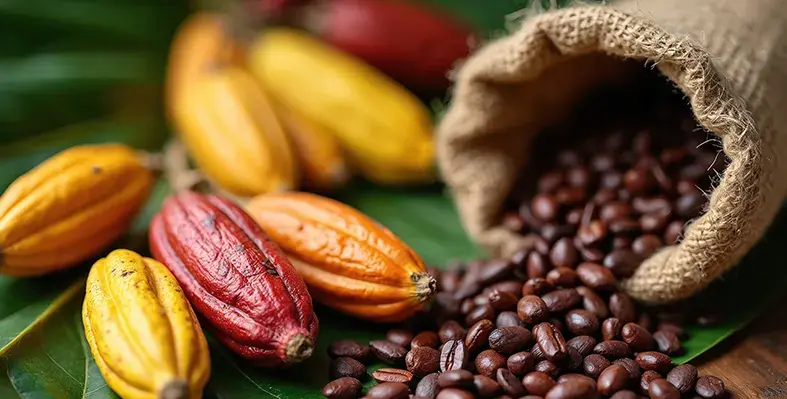
Cameroon expands cocoa and coffee subsidies.