





The International Crops Research Institute for the Semi-Arid Tropics (ICRISAT) has secured a licence for CRISPR-Cas9 gene-editing technology, marking a significant step towards advancing food security and climate-resilient agriculture across smallholder farming communities in Asia and Africa
Gene editing offers researchers a way to develop improved crop varieties more quickly than conventional breeding, which can take many years to combine desirable characteristics. The technology can help accelerate the development of crops with greater tolerance to drought, heat, pests and diseases, alongside improvements in productivity, nutritional quality and other traits valued by farmers. It does so without introducing DNA from unrelated species.
The humanitarian licensing agreement with Corteva and the Broad Institute creates new opportunities to develop improved seeds for smallholder farmers across Asia and Africa. By accelerating the development of crop varieties better equipped to withstand extreme weather, including droughts and floods, the technology could support farm productivity, strengthen rural livelihoods and help meet growing food demand without requiring additional agricultural land.
Acknowledging Corteva and the Broad Institute for their leadership in enabling the agreement, ICRISAT director general Dr Himanshu Pathak described it as a transformative humanitarian milestone for the institute and the millions of smallholder farmers and their families who rely on dryland agriculture.
"Broad’s and Corteva’s leadership in gene editing, combined with ICRISAT's world-leading breeding programs and our other long-standing partnerships with national agricultural research systems, this new capability will accelerate the delivery of practical crop innovations that strengthen food security, improve livelihoods and build more resilient agricultural systems across Asia and Africa,” said Dr Pathak.
The licence covers the full research and product development pathway, enabling ICRISAT to develop new gene-edited solutions across its mandate crops. These include sorghum, pearl millet and other millets, chickpea, pigeonpea and peanut.
The agreement also builds on ICRISAT’s established capabilities in genomics, crop breeding, phenomics and seed systems, alongside its partnerships with national agricultural research organisations. Together, these strengths create an integrated innovation pipeline designed to move scientific discoveries into improved crop varieties for farmers’ fields more efficiently.
Dr Wendy Srnic, vice-president of biotechnology at Corteva, welcomed the collaboration and its potential benefits for smallholder farmers.
"We’re proud to collaborate with ICRISAT and help smallholder farmers across Asia and Africa access gene editing technology,” said Dr Wendy Srnic, vice president, biotechnology for Corteva. “We look forward to working together to develop crops that can better withstand extreme weather events, pests and diseases and help farmers feed their communities while building a more resilient global food system.”
ICRISAT secures gene-editing licence for climate-resilient crops
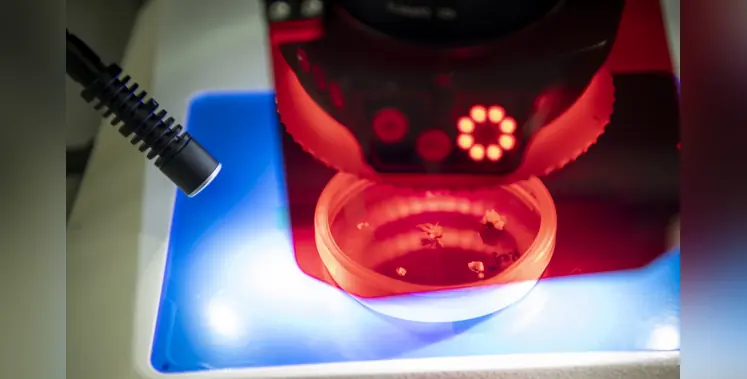
The technology can help accelerate the development of crops with greater tolerance to drought, heat, pests and diseases. (Image source: ICRISAT)