




cc.web.local

twitter linkedin acp contact

Crops

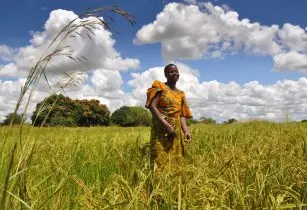
Farming is the backbone of life across the African continent.

Africa’s agricultural sector, long seen as an untapped resource, is emerging as one of the most critical levers for achieving global sustainable development

Since the United Nations launched its Sustainable Development Goals (SDGs) in 2015, progress has been underwhelming. Only 12% of the 169 targets are on track, while more than a third have stalled or even regressed. Yet amidst this global slowdown, one truth stands out clearly: investing in African agriculture could change the game.

Farming is the backbone of life across the African continent. It provides livelihoods for nearly 70% of the population, most of whom are women, and contributes around 30% to the continent’s GDP. However, this vital sector remains deeply underfinanced and underutilised. Cereal production in sub-Saharan Africa has increased by 37% over the past decade, not due to rising efficiency, but through the simple expansion of farmland. Yields per hectare remain approximately 60% below the global average, and just 5% of African farmland is irrigated. Mechanisation and access to inputs are limited, leaving millions of smallholder farmers at a disadvantage.

The result is a growing reliance on imported food. From 2015 to 2017, African nations spent an average of US$27bn a year on imported cereals. That number could balloon to US$110 billion by 2030 if investment remains stagnant. The implications stretch far beyond the continent. As the global population climbs and supply chains grow more fragile, Africa’s ability to produce food locally will be essential for global food security and price stability.

And yet, investment levels remain dismal. In 2022, African agriculture received just $49 billion from all sources—public, private, and development finance combined. That’s only about US$140 per farmer annually, compared to a global average of US$1,300. Agriculture currently draws less than 4% of all investment on the continent, and only 3% of global development funding. By comparison, the Africa Food Systems Forum estimates that US$200bn is needed to build a sustainable agrifood system capable of closing the development gap.

With 250 million Africans working in agriculture, the sector offers one of the most direct and powerful routes to inclusive economic growth. Investment in agriculture has been shown to be two to four times more effective at increasing incomes than investment in any other sector. Moreover, climate-smart practices could make African farms more resilient to climate shocks, enhance food security, and help preserve forests by increasing yields without the need for deforestation. African land also holds significant potential for carbon sequestration, aligning agricultural development with climate action.

Despite these opportunities, public spending on agriculture across African governments is far below target. In 2022, only US$16bn about 3% of public expenditure—was directed toward farming, falling short of the African Union’s recommendation of 10%. Only Malawi and Ethiopia have consistently met that threshold since 2008. Private sector investment is similarly lacking, with just 3% of Africa’s private funding going into agriculture, far below the global average of 10%.

To reverse this, investment strategies must be sharper and more targeted. Development agencies have a pivotal role to play in unlocking further funding through catalytic capital, risk-sharing mechanisms, and blended finance models that draw in private investors. Governments need to focus on building the foundations—improving infrastructure, cutting red tape, and creating a business environment that welcomes agricultural investment. And the private sector must seize the commercial opportunity by scaling innovative financing models, investing in local supply chains, and supporting agri-tech and entrepreneurship.

Efforts are already underway. The Agricultural Transitions Lab for African Solutions (ATLAS), launched by the Paris Peace Forum, is tracking progress and aligning funders across sectors. Its “2x30 Challenge” aims to double the current investment in African agriculture to US$98bn by 2030. The potential pay-off is enormous: food security, stronger rural economies, greater climate resilience, and sustainable growth not only for Africa, but for the world.

African agriculture doesn’t just need more investment—it deserves it. With the right support, it can feed a growing population, lift millions out of poverty, reduce reliance on imports, and transform global food systems. The seeds of change are already in the soil. It’s time we helped them grow.

Farmers will also benefit from a 50% subsidy on pesticides and herbicides.

Namibia’s Ministry of Agriculture is rolling out a US$34mn investment for the 2025/26 financial year to support rain-fed agronomic farming, targeting long-term food security, climate resilience, and rural livelihoods

The funding, announced under the Dry Land Crop Production Programme (DCPP) and supported by the Cereal Value Chain Development Programme (CVCDP) and Comprehensive Conservation Agriculture Programme (CCAP), will reach thousands of small-scale and subsistence farmers across the country.

The initiative will support farmers in 10 key crop-growing regions: Zambezi, Kunene, Omaheke, Otjozondjupa, Kavango East, Kavango West, Ohangwena, Oshikoto, Oshana, and Omusati. The CCAP, meanwhile, will operate across all 14 regions, enhancing conservation practices and climate-smart agriculture techniques.

Each region will receive a tailored portion of the funding, with Zambezi set to receive over US$3.8mn, while Ohangwena, Omusati and Oshikoto will each receive US$2.9mn. Support will come in the form of subsidised seeds, fertilisers, and mechanised tillage services.

Farmers will also benefit from a 50% subsidy on pesticides and herbicides, and US$400 per hectare weeding support (up to five hectares per household). Additionally, the programme offers storage and post-harvest processing support, including up to US$10,000 for grain storage, US$30,000 for hammer millers, and US$30,000 for threshers.

Interested farmers are encouraged to register at the nearest Agriculture Development Centre to access these subsidies.

The overarching goal is to boost yields, food and nutrition security, and reduce poverty and income inequality. The programme also aims to create jobs and build resilient agricultural value chains by supporting inputs and capacity building.

Through these well-structured interventions, Namibia is stepping up its fight against hunger, climate shocks, and rural poverty empowering its farmers to feed the nation from the ground up.

Globally, coffee production is expected to hit a record 178.7 million bags in 2025/26.

Uganda’s coffee industry is stirring up strong momentum, with exports reaching 855,441 bags in August 2025, earning the country Shs722.58 bn, according to the latest report from the Ministry of Agriculture, Animal Industry and Fisheries (MAAIF)

While this marks a 2.45% rise in volume compared to August last year, total earnings dipped 8.19%, largely due to a softening in global prices.

Robusta coffee remained the dominant force, contributing 797,363 bags worth US$180.79mn (≈ Shs705 billion), while Arabica accounted for 58,078 bags, generating US$21.96mn (≈ Shs85.64 billion). Despite the overall drop in Robusta value, Arabica showed impressive gains up 11.88% in volume and nearly 64% in value year-on-year.

The average export price stood at US$3.95 per kilogram (≈ Shs15,405/kg), a decline from US$4.19 in July and US$4.41 last August, reflecting continued global price pressure. MAAIF attributed the lower prices to lingering effects from July’s global market dip, especially for Robusta.

In the 12-month period from September 2024 to August 2025, Uganda exported 7.93 million bags of coffee, up from 6.73 million bags the year prior. Earnings skyrocketed by 58.72%, reaching Shs7.94 trillion, thanks to stronger volume and Arabica’s price surge.

At the farm-gate, prices remained encouraging: Robusta Kiboko fetched Shs6,500/kg, Robusta FAQ Shs13,500/kg, Arabica parchment Shs14,500/kg, while Drugar held steady at Shs13,500/kg, despite a slight dip.

On the export front, Kyagalanyi Coffee Ltd led with an 8.73% share, followed closely by Export Trading Company (8.61%) and Olam Uganda Ltd (8.26%). Together, the top 10 exporters controlled 64% of Uganda’s coffee trade.

Globally, coffee production is expected to hit a record 178.7 million bags in 2025/26, fuelled by recoveries in Vietnam and Indonesia, and record output from Ethiopia, according to the USDA.

Locally, MAAIF credited favourable weather conditions for supporting coffee activities such as planting, pruning, and training. In August alone, over 145 farmer trainings were conducted across 11 regions, reaching 4,000+ farmers, with a focus on climate-smart practices, pest control, and agronomic skills.

Looking ahead, Uganda’s coffee exports for September 2025 are projected at 750,000 bags, as the main harvest season begins in Central and Eastern regions—positioning Uganda to remain a leading coffee exporter both regionally and globally.

Tanzania's tea industry is once again proving that it can compete on both quality and scale.

Tanzania’s tea industry is steeping in new life, fuelled by the revival of long-dormant factories and fresh investment in modern processing facilities

With national output already up by over 5% to 22,000 tonnes in the 2024/25 season, projections suggest a harvest exceeding 30,000 tonnes of made tea by year-end — a significant leap for one of East Africa’s most promising but underleveraged agricultural sectors.

Beatrice Banzi, director general of the Tea Board of Tanzania (TBT), attributes this upward trend to both public-private partnerships and renewed government focus. Notably, Kilolo Tea Factory — once idle — has resumed operations under a joint venture with Chinese investors. Now producing high-grade orthodox tea for both domestic and export markets, Kilolo is a symbol of the sector’s new direction.

"The government is reviewing previously privatised but now non-operational tea factories with the aim of returning them to farmer ownership under the current legal framework," said Banzi, signalling a push toward empowering local producers while ensuring sustainable governance.

In Dar es Salaam, new processing machinery has been installed to improve capacity, while factories in Njombe and Iringa have secured financing through CRDB Bank. These Southern Highlands regions, home to over 70% of Tanzania’s tea are also seeing the rehabilitation of estates that have lain dormant for more than 30 years.

Victoria Tea (formerly Kagera Tea) is also back in business. Located in the Kagera Region, the factory's relaunch is expected to boost both smallholder incomes and Tanzania’s tea export volumes. TBT’s Marketing Manager, Suleyman Chillo, confirmed the factory’s return and outlined plans to work closely with farmers on improved cultivation, fertiliser use, and harvesting practices.

"These aren’t just factories restarting, they’re economic engines for rural communities," Chillo explained.

Tanzania now boasts over 32,000 smallholder tea farmers and seven large-scale producers, with tea grown across six regions: Tanga, Iringa, Njombe, Mbeya, Mara, and Kagera. In total, 23,805 hectares are under cultivation.

While drought impacted the previous season’s target of 25,000 tonnes, with only 22,000 achieved, optimism remains high. TBT’s acting director of regulatory services, Mbushunoti Mindoi, said the affected factories are preparing to restart operations. "Some closures were related to management challenges, but those issues are being resolved. The affected factories are now preparing to resume operations with renewed vigour."

With renewed investment, modern equipment, and an engaged farmer base, Tanzania's tea industry is once again proving that it can compete on both quality and scale brewing real promise for local growers and global markets alike.

Sugar production remains a staple of Zimbabwe’s agricultural economy

Zimbabwe’s agriculture sector is seeing remarkable growth in 2025, with both sugar production and horticultural exports pushing the industry forward

According to IH Securities' 2025 Agriculture Sector Report, the country’s agricultural output is now on track to exceed the US$13.75bn mark by the end of the year, following the impressive US$8.2bn milestone in 2021.

Key drivers of this expansion include improved rainfall, significant government investment in infrastructure like dams, and a renewed focus on high-value crops such as horticulture. This revival is expected to bolster the economy and enhance food security, especially after a challenging 2024 marked by the El Niño-induced drought.

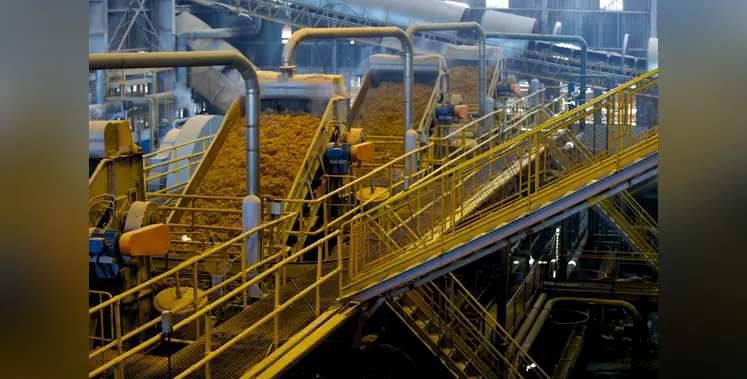
Sugar production remains a staple of Zimbabwe’s agricultural economy. Major producers, including Hippo Valley and Triangle, surpassed national requirements with over 440,000 tonnes in the 2024/25 season. Exports also soared, with Hippo Valley’s sugar shipments increasing by 364%, reaching 15,711 tonnes in just the first quarter. However, local consumption is under pressure, with high costs due to a 30% surtax on imports and a recently adjusted sugar tax. “The recently imposed 30 percent surtax on imports has helped local processors remain competitive, though major off-takers battle with additional costs,” explained IH Securities.

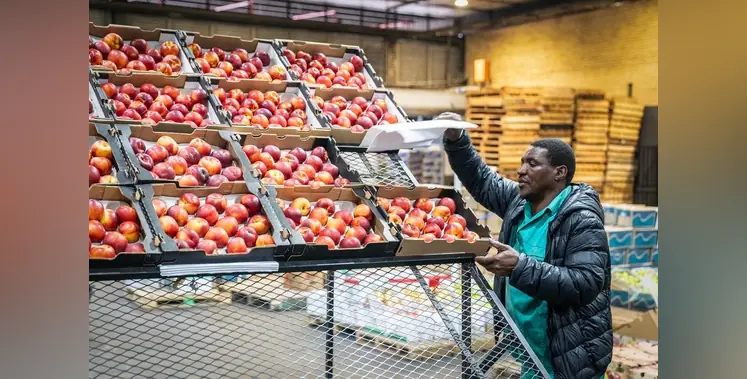
Meanwhile, Zimbabwe’s horticulture sector is on an upward trajectory, led by avocados and blueberries. Avocado production jumped by 164% from 2017 to 2024, establishing Zimbabwe as Africa’s fifth-largest producer. With global demand rising, exports of blueberries have surged by 351% from 2020 to 2024, reaching about US$50mn. The sector’s growth is further supported by initiatives like the Horticultural Enterprise Enhancement Project (HEEP), which aims to inject US$66.5mn into smallholder farming.

Looking ahead, Zimbabwe’s horticultural exports are expected to hit US$2bn by 2030, with demand for products like blueberries, avocados, and sugar peas driving this growth.

As the country diversifies its agricultural exports, the sector is poised to overcome domestic challenges and secure new streams of revenue, fortifying Zimbabwe’s economic future.

More Articles …