


cb.web.local

twitter linkedin acp contact

Agriculture

Improved farm-to-market connectivity is expected to reduce transportation costs.

Liberia’s Ministry of Agriculture has officially launched a major farm-to-market road rehabilitation initiative in Bong County, marking a significant step towards strengthening agricultural value chains and improving rural livelihoods.

Implemented through the Tree Crops Extension Project Phase II (TCEP-II), the project will see the construction and rehabilitation of 59 kilometres of critical feeder roads designed to improve market access for farmers across the county.

The road works have been divided into seven lots covering key farming communities and some of Bong County’s most productive agricultural zones. Once completed, the improved road network will provide farmers with more reliable links to markets, processing centres, and storage facilities, helping to unlock the county’s full agricultural potential.

Improved farm-to-market connectivity is expected to reduce transportation costs, cut post-harvest losses, and boost incomes for farmers, traders, and agribusiness operators. The initiative also supports broader national goals around food security, rural development, and sustainable agricultural growth.

The project was officially launched by Agriculture Minister J. Alexander Nuetah, who described the road works as a direct investment in food production and community resilience. “We are fixing these roads because of agriculture. I therefore urge the people of Bong County to redouble their efforts in producing their own food so they can improve their livelihoods,” Nuetah said.

The Minister also issued a strong warning to contractors, stressing that all work must be delivered within the agreed timelines, with no extensions permitted. He further highlighted the importance of local job creation, urging contractors to prioritise employment opportunities for communities along the road corridors.

Beyond the 59 kilometres already launched, an additional 28 kilometres of farm-to-market roads in Bong County are currently under procurement, further expanding access for rural farming communities. Combined with ongoing works in Lofa County, the total length of feeder roads being rehabilitated under TCEP-II now stands at 340 kilometres.

Funded by the International Fund for Agricultural Development (IFAD), the road works are expected to be completed within ten months. Once finished, the upgraded infrastructure will provide all-weather access to farms, helping to transform Bong and Lofa counties into resilient agricultural production hubs and reinforcing Liberia’s long-term food systems.

Several machinery segments recorded impressive gains.

The Italian agricultural machinery market is showing clear signs of recovery in 2025, driven by rising tractor registrations, renewed farmer confidence and strong public incentives supporting farm mechanisation and innovation.

After several years of contraction, the latest figures suggest the sector is regaining momentum.

Data compiled by FederUnacoma using Ministry of Transport statistics show that tractor registrations climbed to 17,573 units in 2025, marking a 13.7% increase compared with the previous year. This rebound follows a difficult 2024, when registrations fell to a historic low of 15,450 units after three consecutive years of decline.

According to the Federation of Agricultural Machinery Manufacturers, recent sales trends have been largely negative, with the notable exception of 2021, when post-pandemic recovery pushed registrations to a peak of 24,387 units. Forecasts for 2025 initially appeared uncertain, as the first half of the year lagged behind previous performance. However, demand strengthened significantly in the second half, particularly in the final quarter, allowing the market to close the year with positive growth.

Several machinery segments recorded impressive gains. Tractors with loading platforms, commonly known as transporters, posted the strongest performance, rising by 45.7% to 771 units. Telehandlers also saw robust growth, increasing by 18.2% to 1,216 units. Trailer registrations grew more modestly, up just over 4% to 7,812 units.

The only segment still under pressure was combine harvesters. Despite some recovery towards the end of the year, registrations fell by 12%, with just 234 units recorded, reflecting ongoing challenges in high-capital investment machinery.

“Our sector has been impacted in recent years by economic uncertainty, rising list prices caused by rising production costs, and the investment capacity of farms, which have long been experiencing declining profitability,” comments FederUnacoma President Mariateresa Maschio. “But significant support has come from government incentives, including the Innovation Fund entrusted to ISMEA, the ISI INAIL call for high-safety machinery, the 4.0 tax credit and the 5.0 incentives, as well as the PSR (Rural Development Plans), the rural development plans co-financed by the European Union and the Regions. These represent a multi-year instrument and therefore a constant reference in the process of farm innovation”.

Looking ahead, industry leaders remain cautiously optimistic. “The refinancing of incentives for 2026 announced by Minister Francesco Lollobrigida in mid-December,” added Simona Rapastella, Director General of FederUnacoma, “could be crucial to supporting the market's recovery. We will assess this throughout the year, not only with regard to registered vehicles but also to construction machinery, equipment, and components”.

“In November we will have the major EIMA International exhibition,” concludes Simona Rapastella, “which represents a formidable opportunity to monitor the market and understand the demand for new technologies”.

Crédit du Sahel is introducing innovative credit solutions that reflect the seasonal nature of agriculture.

Crédit du Sahel has strengthened its position as a key driver of agricultural finance in Cameroon by formalising a landmark partnership agreement with the National Confederation of Cotton Producers of Cameroon (CNPCC) in Garoua.

Building on more than a decade of collaboration, the renewed alliance aims to accelerate the integration of cotton farmers into the formal banking system, unlocking new opportunities for financial inclusion, income security, and sustainable rural development across the country.

This expanded agreement comes at a critical moment for cotton producers in northern Cameroon, who are navigating increasing regional insecurity alongside stricter regulatory requirements under national financial legislation. For years, many farmers have depended on cash-based transactions, leaving them vulnerable to theft and limiting their access to modern financial services. By promoting structured, secure banking solutions, the partnership seeks to safeguard farmers’ earnings, improve financial transparency, and connect producers to a wider range of tailored financial products.

Moving beyond conventional harvest financing, Crédit du Sahel is introducing innovative credit solutions that reflect the seasonal nature of agriculture. Among these is “soudure” financing, designed to support households during lean periods when income gaps are most pronounced. This initiative will help families manage essential expenses between planting and harvest cycles. The agreement also provides financing for food crops and complementary rural activities, alongside dedicated training loans to strengthen financial literacy and long-term financial planning among cotton producers.

According to Adamou Haman Wabi, Director General of Crédit du Sahel, the core objective of the partnership is to protect producers’ revenues by offering a safer and more reliable alternative to cash handling, particularly in fragile and high-risk regions. This transition represents a significant step towards greater financial resilience and economic stability for farming communities.

From the CNPCC’s perspective, improved access to credit is fundamental to scaling cotton production nationwide. Board Chair Paul Tizi highlighted that meeting national output ambitions is directly linked to the availability of adequate financial resources. This aligns with the goals of SODECOTON, which is targeting an annual production level of 450,000 tonnes. Following a strong recovery in seed cotton output from around 295,000 tonnes to approximately 347,000 tonnes in the 2022/2023 season sustained investment is essential to maintain growth for the more than 200,000 households dependent on cotton farming.

As one of Cameroon’s most valuable cash crops, cotton underpins rural livelihoods in the Far North, North, and Adamawa regions. With 25 years of experience and a network of 20 branches, Crédit du Sahel continues to play a stabilising role in the agro-industrial ecosystem. Through this strategic partnership, the bank and CNPCC are strengthening economic resilience, advancing cashless agriculture, and reinforcing Cameroon’s competitiveness in the global cotton market.

This approach enables households to grow nutritious food, enhance soil health, and adapt more effectively to climate shocks.

The Food and Agriculture Organization (FAO) of the United Nations, working closely with the Government of Zimbabwe and with financial backing from the French Government, has rolled out an innovative Agricultural Voucher System under the Nourish and Thrive: Inclusive and Sustainable Nutrition and Livelihoods Initiative.

The programme is designed to boost food security, improve nutrition, and build long-term community resilience in some of Zimbabwe’s most climate-vulnerable regions. It specifically addresses the pressing challenges faced by communities in the Masvingo and Mwenezi districts, which have been severely affected by climate variability, including El Niño-induced drought conditions that continue to disrupt agricultural productivity and rural livelihoods.

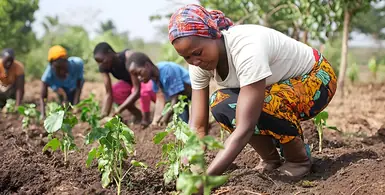
At the heart of the initiative is a voucher-based approach that provides subsidised agricultural input packages to vulnerable rural households. Through this system, farmers are able to access high-quality, drought-tolerant seeds and essential farming resources from local suppliers. By empowering beneficiaries to select and redeem inputs within their communities, the programme supports timely crop production while strengthening local markets. This approach enables households to grow nutritious food, enhance soil health, and adapt more effectively to climate shocks. Overall, the initiative reached approximately 4,000 households across targeted wards, encouraging collaboration between local leaders, agro-dealers, and farming communities to drive inclusive agrifood systems transformation.

A key strength of the programme lies in its strong focus on Protection from Sexual Exploitation and Abuse (PSEA). Acknowledging the risks that can arise during humanitarian interventions, FAO prioritised awareness and education for both beneficiaries and partners. Training sessions focused on prevention, reporting mechanisms, and accountability, reinforcing dignity and safety at the community level. As Ruramai Sibiya from World Vision Zimbabwe noted, proactive sharing of information is crucial for cultivating a culture of protection and dignity in programme implementation.

To enhance transparency and efficiency, FAO trained Voucher Redeeming Suppliers (VRS) on the Identification, Delivery and Empowerment Application (IDEA) platform. This digital solution supports beneficiary management, improves accountability, and streamlines voucher redemption. Combined with local leadership engagement and on-site monitoring, the system has strengthened trust and operational effectiveness.

Community feedback reflects improved access to critical farming inputs alongside greater awareness of safeguarding measures. Collectively, the initiative demonstrates how integrated, rights-based interventions can promote sustainable agriculture, climate resilience, and food security, while ensuring safer and more informed communities across rural Zimbabwe.

Ottevanger Services provides comprehensive support to feed producers. (Image credit: Ottevanger)

Triott Group has announced a major strategic step by bringing all its feed-related businesses together under a single, globally recognised name: Ottevanger.

With immediate effect, Ottevanger, Almex, Inteqnion, IVS Dosing Technology and Pelleting Technology Netherlands (PTN) will operate as one unified brand, reinforcing Ottevanger’s position as a leading global partner to the feed industry.

Based in Moerkapelle, the Netherlands, this consolidation represents a new chapter in Ottevanger’s long-term vision to provide complete, future-ready solutions for feed mills worldwide. By integrating these specialist companies under one name, customers benefit from a single point of contact, enhanced transparency and a more streamlined approach to project delivery and long-term collaboration.

The move also strengthens internal cooperation across disciplines, enabling Ottevanger to design and deliver tailored solutions that respond to the rapidly evolving demands of the global feed sector, including automation, digitalisation and sustainability.

Following the consolidation, Ottevanger now operates through four fully integrated business units, each designed to address both current operational challenges and future industry needs. Ottevanger Milling Engineers focuses on the design and construction of fully automated, turnkey feed mills, including both conventional and modular concepts. Ottevanger Process Solutions delivers high-quality equipment and advanced processes, supporting data-driven, fully automated milling from raw material intake through to packaging.

Meanwhile, Ottevanger Services provides comprehensive support to feed producers, including reliable on-site and remote maintenance, troubleshooting and spare parts supply. Completing the structure, the Ottevanger Development Centre looks to the future by optimising feed mill performance through practical research and development, testing and the creation of sustainable, next-generation solutions.

Commenting on the milestone, Director Ernst Jan Ottevanger said: “For more than a century, Ottevanger has been a family business, built on the finest Dutch quality and craftsmanship. Now we are formally extending our family to welcome these four trusted partners that have already contributed so much to our collective success based on the same shared values.” He added: “This is a significant moment for our company, but more importantly, for our customers worldwide. We are now far better placed to deliver the innovation and lifetime value they need to compete more effectively.”

Ottevanger will continue its close collaboration with Top Silo Constructions (TSC) to deliver advanced feed storage solutions, while TSC remains independent due to its diverse customer portfolio.

More Articles …